

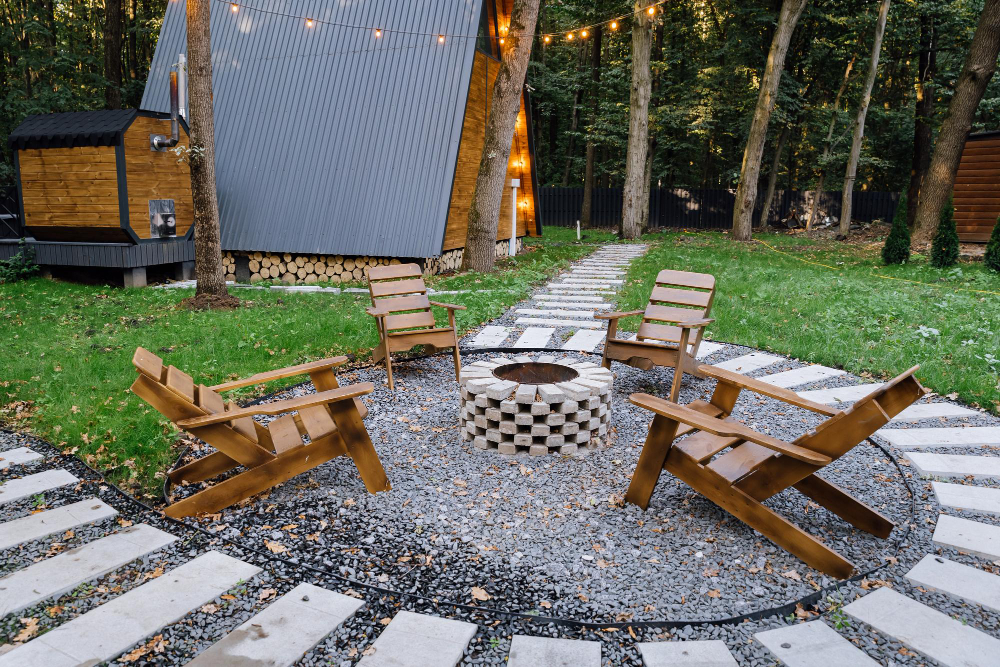
Keep the nearest planting bed a few feet back from the ring, then choose low moisture plants that do not shed dry litter. Heat and embers set that rule, and climate decides the plant list.
Our crews design these spaces as a trusted patio contractor working across Denver, CO and the surrounding metro. We lay out the planting zones at the same time as the hardscape, so the beds are not an afterthought squeezed around finished stone.
Front Range yards bring their own constraints. Clay soil, a short shoulder season and dry air all narrow the list before anyone picks a favorite.
Heat, Embers and the Zone Around the Ring
Two different things threaten planting near a fire pit. Radiant heat scorches foliage over time, showing up as browned edges on the side facing the fire. It is a slow effect rather than a dramatic one. Embers are the sharper risk, since a wood burning pit throws sparks that land several feet out and find dry material.
That produces a simple zoning logic. The ground immediately around the ring stays hardscape, whether that is the patio surface or a band of stone. Beyond it comes a zone for low, moist, fire resistant planting. Ornamental grasses, junipers and anything else that dries to a crisp belong further out still.
Gas pits change the calculation somewhat, since they produce no embers, though radiant heat still rules out planting right at the edge. That difference in fuel type is part of what separates the best patio fire pits in Denver from the ones that fight their surroundings, and our guide to choosing a fire pit for Colorado weather covers how it shapes the space around the ring.
Plant Pairings That Work in Front Range Yards
Pairings beat single plants. A bed that reads well from a seated position needs a low edge, a mid layer and something with structure behind it. These combinations hold up in Denver metro conditions and handle the dry air without constant watering.
| Zone from the ring | Pairing | Why it works here |
|---|---|---|
| Nearest planted band | Hens and chicks with creeping sedum | Succulent foliage holds water, stays low, resists ember ignition |
| Nearest planted band | Woolly thyme with snow in summer | Mat forming, tolerates heat and reflected warmth off stone |
| Mid layer | Catmint with blanket flower | Long bloom, drought tolerant, soft texture at seated eye level |
| Mid layer | Russian sage with yarrow | Height without bulk, handles wind and poor soil |
| Outer layer | Potentilla with dwarf rabbitbrush | Shrub structure and late season color, keeps dry litter back |
| Outer layer | Serviceberry as an anchor | Native, four season interest, screens without crowding the space |
Spacing deserves as much thought as selection. Plants crowded against the hardscape edge lean toward the open side and lose their shape. A bed set back slightly stays full, and it keeps dry material away from the fire.
Planning a pit you will actually sit at in November? Give us a call at (720) 821 0467, and we will walk the yard and work out the screening and planting that keep the space usable past the first frost.
What to Keep Out of the First Few Feet
Resinous evergreens are the clearest exclusion. Junipers, arborvitae and most dwarf conifers carry volatile oils and fine dead material inside the plant, and they ignite readily. They belong at the far edge of a yard, not framing the seating.
Dry ornamental grasses need the same treatment, which surprises people. Grasses are a staple of Colorado planting design. Through fall and winter they stand as cured fuel, exactly when the fire pit gets the most use. Keep them outside the ember zone and cut them back before the heavy burning season. The same caution applies to deep organic mulch, since shredded bark holds embers and can smolder unseen for a long time. We specify gravel, decomposed granite or stone within the inner band, and save bark mulch for beds further out.
Designing for Scent, Screening and Shoulder Seasons
Planting near a fire pit does more than fill space. A seated group is at knee height to the beds, so texture and scent register strongly. Catmint and lavender release noticeably in evening warmth, and both handle our dry air with little water once established.
Screening is the other quiet job. A fire pit in an open backyard feels exposed, and a shrub layer behind the seating gives the space an edge without walling it in. Evergreen screening is tempting and should be placed carefully given the resin issue, so deciduous shrubs with dense branching usually serve better close in.
Shoulder season use is where the planning pays off, since fall and early spring are when a pit gets heaviest use. Plants that still look like something in November keep the space from feeling abandoned. Seating and circulation shape all of this, and our notes on fire pit zone design and safety cover how we size that footprint before a single shrub goes in.
Soil, Water and the Reality of Clay
Soil across Denver, CO is heavy clay in most neighborhoods. It drains slowly, compacts under foot traffic and swells and shrinks with moisture. Drought tolerant plants fail here more often from standing water in winter than from drought in summer. Amending the bed with compost solves most of that. Raising the bed slightly, where the grade allows, solves the rest.
Irrigation should be zoned separately from turf. The plants that work near a fire pit want far less water than a lawn. Share a zone and one of the two is always wrong. Drip lines keep water off the foliage and out of the hardscape joints, which matters for the patio as much as for the planting. Grading around the fire feature should carry water away from the seating rather than into it. That gets set during construction rather than corrected later.
Keeping the Planting Safe Through Fall
Maintenance around a fire feature is mostly removal. Dead foliage, fallen needles and spent annual growth are the fuel that turns a stray ember into a problem. Clearing them before the heavy use season is a short job with real value.
Cut grasses back before winter rather than leaving them standing for structure, at least within the ember zone. Rake stone and gravel bands clear of leaf drop, since litter settling into gravel defeats the purpose of using gravel. Check that the inner band is still wide enough after a few seasons of growth.
Plants spread, and the clearance you designed slowly disappears. That is why our fire pit installation work fixes the band and the surrounding grade during the build, giving the planting a hard edge to grow against and leaving you with an afternoon of raking instead of a reset.
Frequently Asked Questions
How far back should plants be from a fire pit?
Keep the ground right around the ring as hardscape, such as patio stone or a gravel band, and start the nearest planting bed a few feet back. Low, moist, fire resistant plants go in that first planted zone. Grasses and anything that dries out belong farther out.
Which plants should I keep away from my fire pit?
Resinous evergreens like junipers, arborvitae and most dwarf conifers, because they hold volatile oils and dead material that ignite easily. Dry ornamental grasses and deep bark mulch should stay out of the ember zone too. Use gravel, decomposed granite or stone in the inner band instead.
Does a gas fire pit change what I can plant nearby?
Somewhat. Gas pits don’t throw embers, so the spark risk drops. They still give off radiant heat, though, which scorches foliage over time, so planting right at the edge still isn’t a good idea.
Can you design the planting along with the patio and fire pit?
Yes. We lay out the hardscape, fire feature and planting beds together, so the clearances, grading and irrigation zones are set during construction instead of fixed later. A free design consultation is the place to start.
The right planting plan keeps the space safe, green and inviting through the fall and spring seasons, when you’ll use the fire the most. Denver Patio Masters designs the patio, fire feature and planting as one project, built for clay soil and Front Range weather. Prefer to talk it through? Call (720) 821 0467, and book your free design consultation.