

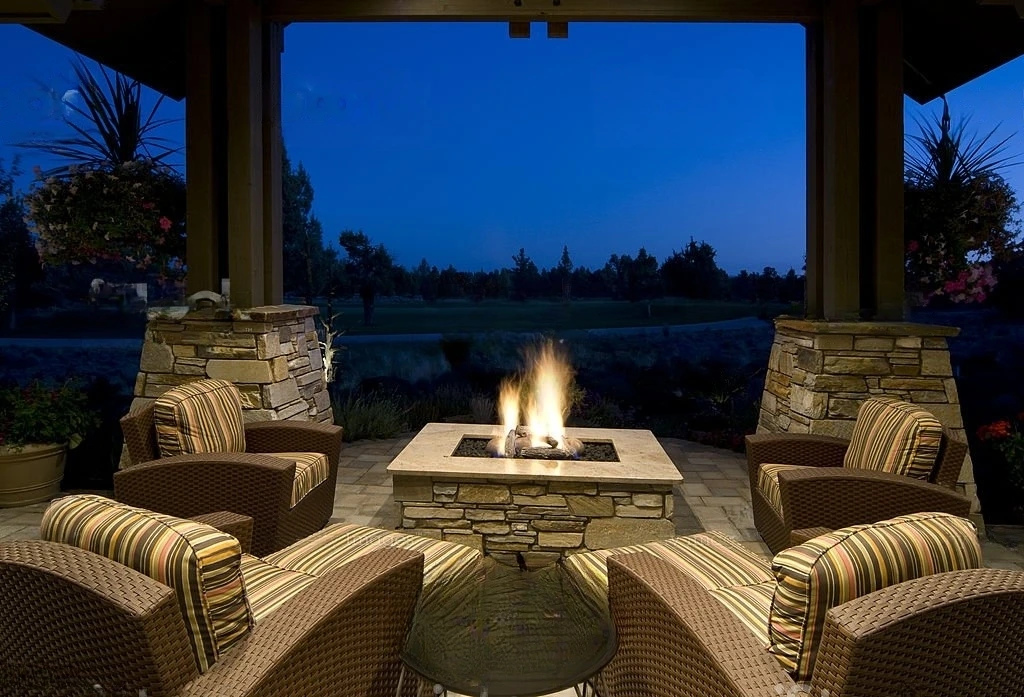
As an established patio contractor, we've noticed that a paver patio built without a lighting plan tends to go quiet the moment the sun goes down. The layout, the color, the texture worked into the stone, all of that becomes much harder to appreciate once darkness sets in. Good lighting is what allows a paver patio to hold its own at nine in the evening just as well as it does at three in the afternoon.
We spend a fair amount of time talking with homeowners about lighting during their patio projects, mostly because it tends to get added on near the end when it actually works better woven into the original plan from the start.
Why Lighting Changes How You Use a Paver Patio
A patio that only functions during daylight hours is only half as useful as one that is lit for evening use. Lighting extends the hours a space gets used, makes it feel safer to walk across uneven ground after dark, and highlights the parts of the design that make a paver patio worth having in the first place, like pattern work, borders, and any elevation changes.
There is also a practical side to this. Steps, edges, and grade changes are exactly where people trip in the dark, so lighting placement is not just a style choice. It is a safety consideration built into the design.
Low-Voltage Path and Border Lights
Path lights are the fixture most people picture when they think about patio lighting, and for good reason. Small fixtures placed along the edge of a walkway or the border of a patio mark the boundary of the space and make it easy to see where the paved surface ends.
Low-voltage systems run on a transformer rather than standard household current, which keeps them safer around a surface where people are walking barefoot or where moisture collects after it rains. Spacing matters here. Fixtures placed too far apart leave dark gaps, while fixtures placed too close together can look busy and overdone. A general rule is to space path lights so the pools of light from each fixture just barely overlap.
Recessed Deck and Paver Lights
For a cleaner look, some homeowners prefer lighting that sits flush with the paver surface itself rather than fixtures that stick up above it. Recessed paver lights are installed directly into the joint or surface of the patio, so during the day they are barely noticeable, and at night they cast a low glow across the ground.
These work particularly well along stair edges, around the perimeter of a fire pit area, or along a border where a raised fixture would interrupt the clean lines of the design. The trade-off is that recessed fixtures usually require more planning during installation, since they need to be built into the paver layout rather than added afterward.
String Lights and Overhead Options
While path and recessed lighting handle the ground level, overhead lighting is what gives a patio its ambiance. String lights strung between posts, a pergola structure, or the side of the house add a warm, layered look that ground-level fixtures cannot replicate on their own.
Overhead string lighting works especially well paired with a pergola or patio cover, since the structure gives the lights something to attach to without needing separate posts. For patios without an overhead structure, freestanding light poles are a reasonable alternative that still gets fixtures up and off the ground.
Fire Features as Ambient Light
A fire pit or fire feature built into a paver patio does double duty as both a gathering point and a light source. The warm, flickering light from a fire pit fills in a lot of the ambiance that overhead lighting alone does not match, and it tends to become the natural focal point of the whole seating area once the sun goes down.
Pairing a fire feature with a small amount of path lighting nearby, rather than relying on it as the only light source, usually strikes the right balance between mood lighting and actually being able to see where you are walking.
Planning Your Layout Before Installation
The lighting choices that work best come down to how the patio is actually going to be used. A patio meant mostly for quiet evenings with a book calls for a different plan than one built around regular entertaining for a group. Walking the space, marking where people will actually sit, cook, and walk, and figuring out which areas need functional light versus which areas just need atmosphere, makes a real difference before any wiring goes in.
We walk through lighting placement as part of every paver patio design consultation, since it is a lot easier to plan wiring and fixture placement before the pavers go down than to retrofit it afterward.