

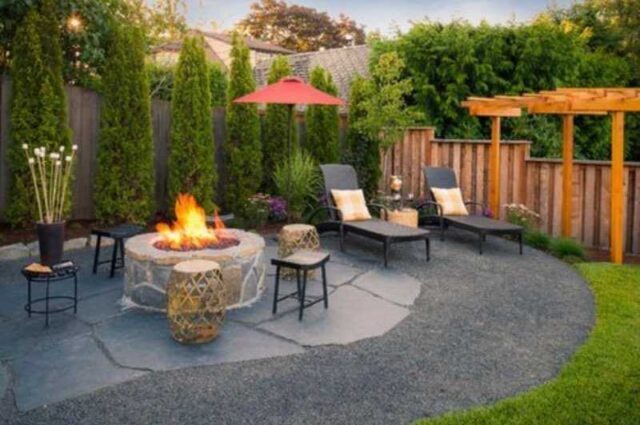
A fire pit area often gets the most attention during the design phase. Then, once the build is done, the landscaping around it kind of becomes an afterthought. That's a missed opportunity, you know. The plants and hardscape around a fire pit make the space feel complete in every season, not just the warm months when the fire actually gets lit.
Our team designs fire pit areas for homeowners throughout the Denver metro area, where four genuinely different seasons mean a planting plan has to work hard all year. Hot, dry summers. Colorful falls. Snowy winters. Unpredictable springs.
As a dependable patio contractor, we pair plants and hardscape materials together so the space holds visual interest no matter what time of year you step outside.
Starting With the Hardscape Foundation
Before plants ever enter the conversation, the hardscape around a fire pit needs to work on its own. Materials like natural stone, pavers, or stamped concrete form the base layer that plantings will eventually frame, so getting the color, texture, and layout right at this stage makes every planting decision afterward easier.
We typically design a slightly wider hardscape apron around a fire pit than homeowners initially expect, since it needs to accommodate seating, walking paths, and a safe clearance from the fire itself.
Texture variation in the hardscape also matters more than people realize. A single flat material across the entire fire pit area can look plain once the surrounding plants die back for winter, while a mix of textures, like a smooth paver field paired with a rougher natural stone border, keeps visual interest even when nothing is blooming.
We often carry a stone or paver accent from the fire pit surround into a nearby seat wall or planting bed edge, tying the whole area together as one design rather than separate pieces placed near each other.
Choosing Plants That Can Handle Heat and Smoke
Plants placed close to a fire pit need to tolerate more heat exposure and occasional smoke drift than plants elsewhere in the yard. Ornamental grasses, like feather reed grass or blue oat grass, tend to hold up well in this kind of environment and add movement and texture through most of the growing season.
Sedum and other low, drought-tolerant groundcovers are another solid choice close to the fire pit itself, since they're less likely to be damaged by radiant heat than taller, softer-leaved plants.
For plantings a bit farther back from the direct heat zone, you have more flexibility to add flowering perennials that bring seasonal color without the same heat-tolerance concerns. Whether you choose built-in or portable fire pits also shapes how close you can plant, since the heat zone and clearance requirements differ between the two.
Russian sage, coneflower, and black-eyed Susan all do well in Colorado's climate and provide color through summer and into early fall, which is exactly when a fire pit area tends to get the most use for evening gatherings.
Not sure which plants near your fire pit keep dying back after one hot summer? Give us a call at (720) 594-0235, and we'll take a look at the layout, sun exposure, and heat zone before you plant anything else.
Layering for Spring Through Fall Interest
A fire pit area that only looks good in July isn't finished. Seasonal layering works the same way here as it does in any other part of a landscape design: choosing a mix of plants that peak at different points through the growing season.
Early spring bulbs like crocus or daffodil planted near the edges of the hardscape give the space life before most perennials have even woken up, while summer perennials carry the middle months.
By early fall, ornamental grasses and late-blooming perennials like asters or sedum autumn joy take over, often right around when fire pit use starts picking back up as evenings cool down. A few shrubs with strong fall foliage color, like dwarf burning bush or certain viburnum varieties, are worth positioning where they'll be visible from the main seating area rather than tucked off to the side.
- Spring: crocus and daffodil bulbs along the hardscape edge for early color
- Early summer: Russian sage, coneflower, and black-eyed Susan for heat-tolerant blooms
- Late summer into fall: ornamental grasses, asters, and sedum autumn joy
- Fall foliage: dwarf burning bush or viburnum positioned in view of the main seating area
- Winter: evergreens and standing grasses left uncut for structure and texture
Designing for Winter, Not Just Around It
Winter is where a lot of fire pit landscaping falls flat, since most flowering plants have died back and the space can look bare right when a fire pit might get its most cozy, practical use on a cold evening.
Evergreen shrubs, ornamental grasses left standing rather than cut back in fall, and structural elements like a well-placed boulder or retaining wall all keep the space from looking empty once the leaves are gone.
Lighting becomes a bigger factor in winter planning too, since shorter days mean the fire pit area gets used in the dark more often. Low path lighting along the hardscape edges and subtle uplighting on a key shrub or evergreen keep the space feeling intentional even when nothing is actively blooming.
We plan lighting placement at the same time as the plant layout, rather than treating it as a separate add-on later.
Keeping Maintenance Realistic Year Round
The best-looking fire pit landscape design is the one that actually gets maintained, which means long-term care has to factor into plant selection from the start. Grouping plants with similar water and sun needs together simplifies irrigation and reduces the chance of some plants thriving while others struggle nearby.
Limiting the total number of plant species around a single fire pit area also makes the space easier to maintain and tends to look more intentional than a large, scattered mix. Homeowners comparing the best fire pits for their yard often find that simplifying the surrounding plant palette pays off just as much as the fire pit choice itself.
Frequently Asked Questions
What plants tolerate heat and smoke best near a fire pit?
Ornamental grasses like feather reed or blue oat grass, along with sedum and other low groundcovers, hold up well close to the heat zone. Flowering perennials work better set back a bit further.
How do I keep a fire pit area from looking bare in winter?
Lean on evergreens, ornamental grasses left standing through winter, and structural elements like boulders or a retaining wall. Path and accent lighting also help the space feel finished after dark.
Can existing landscaping be reworked around a fire pit I already have?
In most cases, yes. We assess what's already established, what's struggling from heat exposure, and where gaps exist before recommending new plantings or hardscape adjustments.
Reach our team at (720) 594-0235, Monday through Sunday from 9:00 AM to 5:00 PM, or visit our contact page to schedule a free design consultation.