

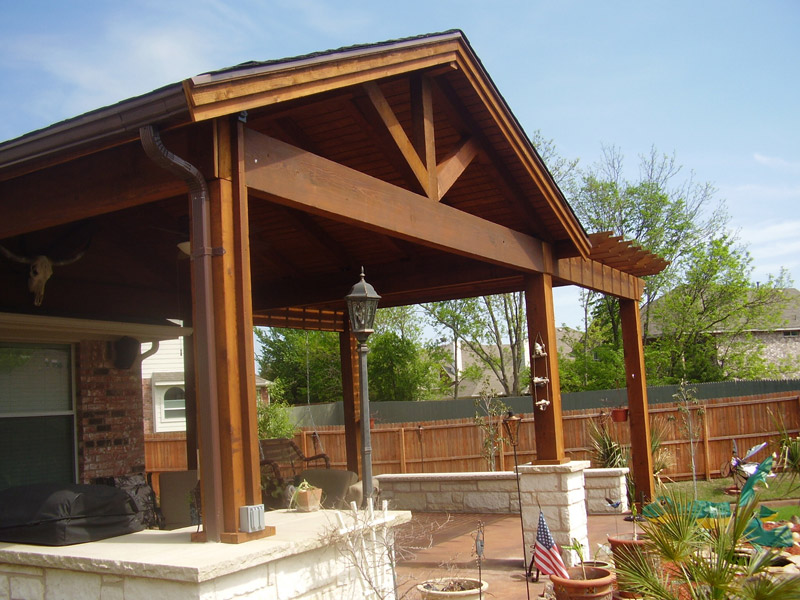
Colorado's weather doesn't do anything quietly, and a patio cover sits right in the middle of that. Heavy rain, sudden hailstorms, steady wind, you know, any of it can turn a poorly designed cover into something closer to a drum than a relaxing outdoor space.
Most homeowners don't think about sound when they're planning a patio cover. But once a Front Range thunderstorm rolls through, it becomes kind of impossible to ignore.
Our team builds patio covers for homeowners across the Denver metro area, and hail season gives us real-world feedback on what actually holds up, sound-wise. A professional patio contractor in Denver will tell you that material choice, structure, and a few design details all play into how a cover sounds when the weather gets rough.
Here's what that actually looks like in practice.
Why Roofing Material Is the Biggest Factor
The material used on a patio cover's roof has more influence on noise than almost anything else in the design. Metal roofing, while durable and low-maintenance, tends to amplify the sound of rain and hail more than other options unless it's paired with proper underlayment and insulation.
We often use a solid roof deck with sound-dampening underlayment beneath metal panels specifically to cut down on that drumming effect, rather than mounting metal directly over open framing.
Solid roof structures with shingles or a built-up roofing system tend to be quieter than open metal panel systems, since more layers absorb the impact of rain and hail before the sound reaches the space below.
For homeowners who want the look of a more open, louvered, or pergola-style cover but are worried about noise, we talk through hybrid options, like a solid roof section over the main seating area paired with an open structure elsewhere, so the space gets some acoustic benefit without losing the airier feel entirely.
This is one of many reasons patio covers need to be planned around actual weather patterns, not just looks.
| Roofing Option | Typical Noise Level | Notes |
|---|---|---|
| Bare metal panels | Loudest | Amplifies rain and hail without a buffering layer |
| Metal with sound-dampening underlayment | Moderate | Cuts the drumming effect while keeping a low-maintenance roof |
| Shingled or built-up roof | Quietest | Multiple layers absorb impact naturally |
| Hybrid solid + open sections | Varies by zone | Balances acoustic benefit with an airier feel |
How Structure and Framing Affect Sound Transmission
Beyond the roofing material itself, the framing underneath plays a real role in how sound travels through a patio cover.
A more rigid, well-braced frame tends to transmit less vibration than a lighter frame, since a lot of the noise from rain or hail isn't just the direct impact sound, it's vibration traveling through the structure into the posts and eventually the patio itself. We size framing members appropriately for roof load and local wind and snow requirements, which also reduces this kind of vibration-based noise.
Spacing and support points matter too. A roof deck with proper support spacing flexes less under impact than one spanning too far between supports, and less flex generally means a quieter surface.
For homeowners weighing automated shade options, smart patio covers add framing and motor considerations that affect how the whole structure handles noise. Framing specs aren't just a structural checkbox. Getting them right also directly affects how the finished cover sounds and feels during a storm.
Does your current patio cover sound like a drumline every time it hails? Give us a call at (720) 594-0235, and we'll take a look before the next storm rolls through.
Insulation and Underlayment Options That Help
Adding insulation or acoustic underlayment beneath a patio cover's roofing material is one of the more effective upgrades for noise reduction, and it's often more affordable than switching to an entirely different roofing system. Foam board insulation, rubberized underlayment, and specialized acoustic mats are options we discuss with clients, depending on the roofing material and budget.
Each works a little differently, but the idea is the same: add a layer that absorbs impact energy before it becomes audible sound inside the covered space.
This kind of upgrade tends to make the biggest difference on metal roof systems, since metal without any buffering layer is the loudest option during hail specifically. For solid roof systems with shingles or similar materials, the built-up layers already provide some natural sound dampening, so additional acoustic material offers a smaller, though still noticeable, improvement.
- Solid roof deck with sound-dampening underlayment beneath any metal panels
- Framing sized for local wind and snow loads, which also reduces vibration-based noise
- Foam board, rubberized underlayment, or acoustic mats added beneath the roofing material
- Gutters properly secured and isolated so they don't rattle against a metal roof edge
- Downspouts directed toward planting beds or gravel instead of splashing onto hardscape
Managing Rain Runoff Without Adding Noise
Gutters and drainage systems are functional necessities on a patio cover, but poorly designed ones can add their own noise problems on top of what the roof itself produces. Metal gutters mounted directly against a metal roof edge can rattle or amplify sound during heavy rain if they're not properly secured and isolated with the right hardware.
We pay close attention to gutter attachment details for this reason, since a loose or poorly fastened gutter system can undo some of the acoustic benefit gained from a good roofing choice.
Downspout placement matters for noise too, particularly if water discharges onto a hard surface like a concrete patio directly below. Directing downspouts toward planting beds, gravel areas, or extended underground drainage rather than letting water splash directly onto hardscape reduces the additional splashing noise that shows up during heavy storms, on top of the practical drainage benefits.
Balancing Noise Reduction With Design and Budget
Every noise-reduction upgrade adds cost, so we talk through priorities with each client rather than assuming every project needs the maximum acoustic treatment available. A patio cover used mainly for daytime entertaining might not need the same level of sound dampening as one attached directly outside a bedroom window, where storm noise could disrupt sleep.
Understanding how and when the space will be used helps us recommend the right level of investment in materials and underlayment. Staying on top of patio cover maintenance also keeps these acoustic upgrades performing as designed, year after year.
Frequently Asked Questions
Is a metal patio cover always going to be loud in the rain?
Not if it's built with a solid roof deck and sound-dampening underlayment beneath the panels. Bare metal over open framing is the loudest setup; adding a buffering layer makes a real difference.
Can I add sound dampening to a patio cover I already have?
In many cases, yes. Underlayment and insulation can sometimes be retrofitted depending on the existing structure, though it's easier and more effective to plan for it during initial construction.
Do gutters actually make a patio cover louder?
They can if they're loosely mounted directly against a metal roof edge. Properly secured and isolated gutter hardware prevents the rattling that undoes an otherwise quiet roofing setup.
Reach our team at (720) 594-0235, Monday through Sunday from 9:00 AM to 5:00 PM, or visit our contact page to schedule a free design consultation.