

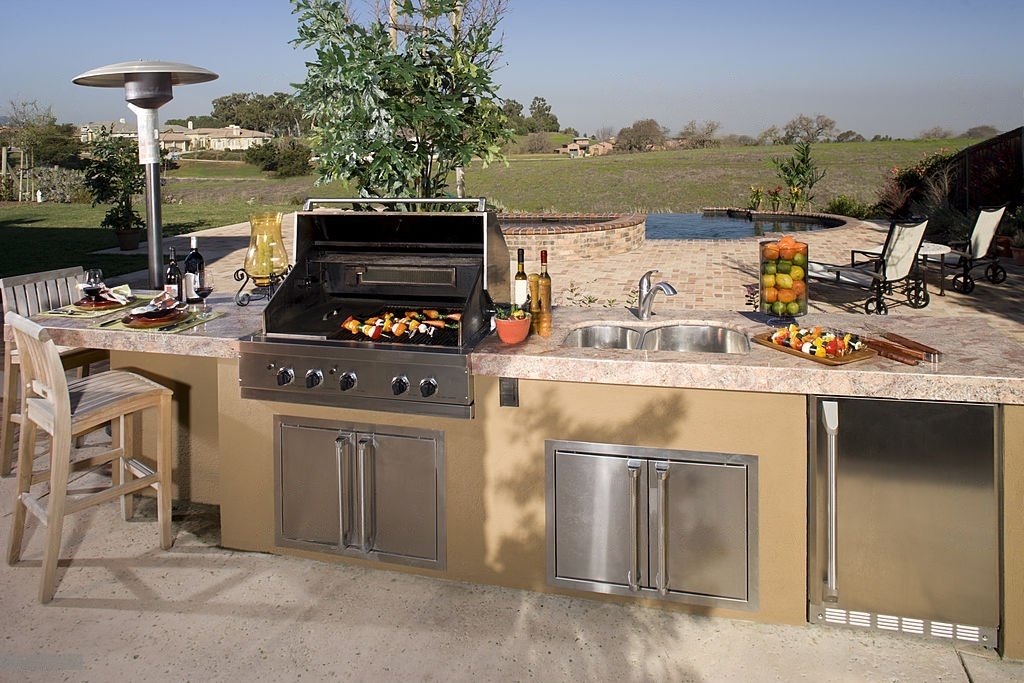
An outdoor kitchen is only as good as its storage. More than a few homeowners have built a beautiful grilling station, only to realize they still have to carry every utensil, cushion, and propane tank back and forth from inside. Storage isn't the flashy part of outdoor kitchen design, but it can be the difference between a space used every week and one that just sits there looking nice.
As a trusted patio contractor in Denver, our team designs outdoor kitchens for homeowners across the metro area, and Colorado's weather swings play a bigger role in storage planning here than in many other climates. Hot, dry summers followed by hard freezes and heavy snow mean storage has to hold up to real temperature extremes, not just look good on installation day.
Here's what tends to hold up over time and what does not.
Built-In Cabinetry Made for Outdoor Conditions
Built-in cabinetry is the backbone of most outdoor kitchen storage, but not every cabinet material survives a Colorado winter. Stainless steel is one of the most common choices we install because it resists rust, handles temperature swings, and doesn't warp the way some wood or particleboard options can once moisture gets involved.
Marine-grade polymer cabinetry is another option we use often, particularly for clients who want a lower-maintenance surface that won't need refinishing.
Beyond material, cabinet placement matters just as much. We consider which cabinets sit closest to the grill or cooking surface, since those are the ones you open most often and should hold the tools and supplies you reach for constantly.
Cabinets further from the cooking zone are better suited for bulkier or less frequently used items, like extra propane tanks, serving platters, or seasonal cookware that only comes out a few times a year. Getting this right often comes down to how well you plan outdoor kitchens from the first layout sketch.
| Material | Pros | Best For |
|---|---|---|
| Stainless steel | Rust-resistant, handles temperature swings well | Cabinets near the grill and cooking zone |
| Marine-grade polymer | Low maintenance, won't need refinishing | Clients who want a set-it-and-forget-it surface |
| Powder-coated aluminum | Lightweight, resists corrosion | Larger enclosed storage bays |
Drawers and Pull-Outs for Everyday Tools
Deep drawers tend to get more actual use than cabinets with doors, since you can see everything at once instead of digging through a dark cabinet interior. We often design a dedicated utensil drawer near the primary cooking station, along with a slightly deeper drawer nearby for larger items like grill grates, cutting boards, or serving trays that don't fit neatly on a shelf.
Pull-out trash and recycling bins are another feature homeowners often request once they realize how much cleanup happens during an outdoor cooking session. Building these into the cabinetry, rather than relying on a freestanding bin nearby, keeps the space looking finished and keeps pests away from exposed food scraps.
This kind of detail is exactly the sort of thing we walk clients through when building an outdoor kitchen, since it's easy to overlook until the space is already in use. A pull-out shelf for a cutting board or prep surface frees up counter space during actual cooking rather than after the fact.
Weatherproofing Storage for Colorado's Climate
Colorado's freeze-thaw cycles are hard on outdoor storage in ways that don't always show up right away. Water that gets into a seam or gap in cabinetry can freeze, expand, and cause cracking or warping over a single winter, which is why sealed, weather-rated doors and gaskets matter more here than in milder climates.
UV exposure is the other factor that's easy to overlook. Denver's elevation means stronger sun exposure than a lot of other parts of the country, and materials that aren't UV-stabilized can fade or become brittle faster than expected. Thinking through your outdoor kitchen layout early on makes it much easier to plan for weatherproofing before cabinets are ever installed.
A few things worth checking before you commit to a cabinet system:
- Door and drawer fronts have a continuous gasket seal, not just a friction fit
- Hinges and hardware are rated for outdoor or marine use, not repurposed indoor hardware
- Finishes are UV-stabilized rather than a standard indoor coating
- Cabinet bases sit elevated off the patio surface so standing water and snowmelt drain away
- Ventilated compartments are used anywhere a propane tank or fuel source is stored
Storage for Propane, Grills, and Bulky Equipment
Propane tank storage is one of the most practical problems we solve in outdoor kitchen design, since tanks need proper ventilation and can't be sealed into an airtight cabinet for safety reasons.
We build ventilated, code-compliant compartments sized specifically for tank storage, keeping them accessible for swaps without leaving the tank exposed to the weather or in the way of foot traffic around the cooking area.
For homeowners who also want to store a portable grill, smoker, or seasonal equipment like patio heaters, we sometimes design a larger enclosed storage bay as part of the outdoor kitchen structure itself, rather than leaving that equipment under a tarp on the side of the patio.
This works especially well when paired with a patio cover or pergola, since the enclosed bay can share a roofline with the rest of the structure instead of looking like an afterthought.
Noticed your propane tank crammed behind a folding table or grill tools scattered across the counter every time you cook outside? Give us a call at (720) 594-0235, and we'll help you plan storage that actually fits how you cook.
Keeping Cushions, Linens, and Small Items Dry
Cushions, table linens, and smaller soft goods are easy to forget during outdoor kitchen planning, but they're also among the most damaged by sun and moisture if left without a dedicated spot. A deacon's bench or storage ottoman built into the seating area gives these items a home that doesn't require a trip back inside every time the weather turns.
For kitchens with more counter space, a dedicated dry storage cabinet with a tighter door seal works well for smaller items like extra napkins, coasters, or non-perishable pantry basics. We usually place this cabinet under a covered section of the kitchen, whether that's a patio cover, pergola, or roof overhang, since even a well-sealed cabinet benefits from some extra protection from direct sun and blowing snow.
Designing Storage Around How You Cook
The best outdoor kitchen storage layout isn't the one that looks best on paper. It's the one that matches how you actually cook and entertain.
A household that grills a few nights a week has different priorities than one that mainly uses the space for larger gatherings a handful of times a season, and we design the cabinet and drawer layout around those real habits rather than a generic template.
Frequently Asked Questions
What's the best cabinet material for an outdoor kitchen in Colorado?
Stainless steel and marine-grade polymer are the two we install most often, since both handle freeze-thaw cycles and UV exposure well. The right choice usually comes down to maintenance preference and budget, which we walk through during design.
Can I add better storage to an outdoor kitchen I already have?
In many cases, yes. Retrofitting a drawer system, a ventilated tank compartment, or a covered dry-storage cabinet is often possible without rebuilding the whole kitchen, depending on the existing structure.
How much storage should I plan for in a new outdoor kitchen?
It depends on how you cook and entertain. We size cabinets and drawers around your actual routine, from everyday grilling to occasional large gatherings, rather than a one-size-fits-all layout.
Reach our team at (720) 594-0235, Monday through Sunday from 9:00 AM to 5:00 PM, or visit our contact page to schedule a free design consultation.