

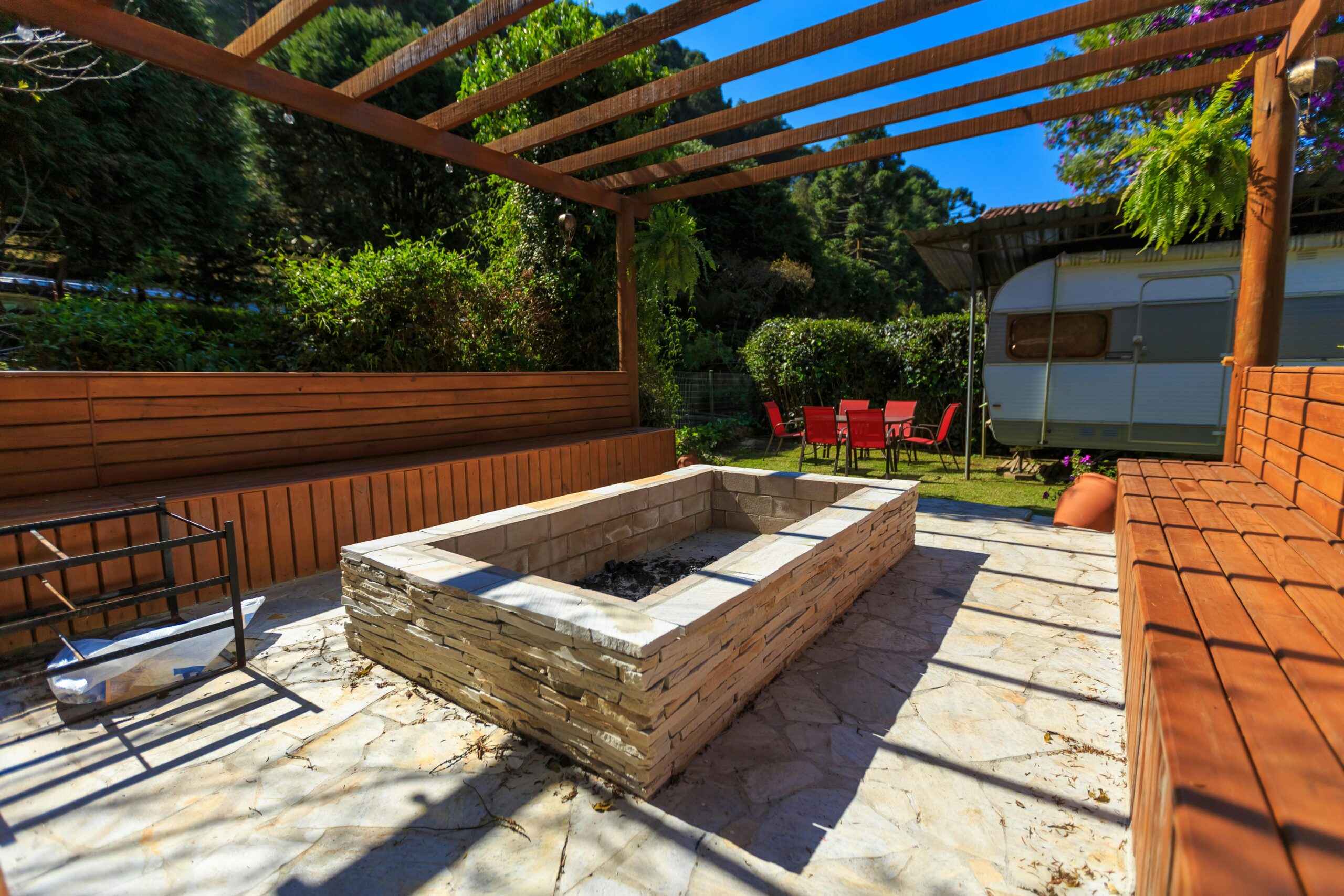
A fire pit changes how a backyard gets used. It gives people a reason to sit outside after dinner, stretches the season into Colorado’s cooler evenings, and becomes the natural gathering point at almost any outdoor get-together. The decision most Denver homeowners face is not whether to have one but which kind, and any exceptional patio contractor will tell you the answer rarely comes down to looks alone. Built-in fire pits and portable units are different products with different costs, different design implications, and different long-term value. Here is how they compare.
What Is a Built-In Fire Pit?
A built-in fire pit is a permanent outdoor fire feature constructed as part of the patio itself. It sits within or adjacent to the patio surface, typically ringed by a concrete, stone, or paver surround with seating integrated around it. Built-in fire pits can be gas-burning, connected to a dedicated gas line, or wood-burning with a properly designed firebox and drainage.
The defining characteristic of a built-in fire pit is that it is designed and built as part of the outdoor space, not placed into it afterward. The surround, the seating configuration, the relationship to the patio surface, and any connection to a gas line are all planned during the original build or a deliberate renovation. This integration is what gives built-in fire pits their design and functional advantage.
What Is a Portable Fire Pit?
A portable fire pit is a freestanding unit that can be placed on an existing patio surface and moved as needed. They range from simple steel bowls to more refined tabletop gas units with glass surrounds. Most portable fire pits are wood-burning, though propane and natural gas portable models are widely available.
The primary appeal of a portable fire pit is flexibility. You can move it to different parts of the patio, store it during winter months, and add it to an outdoor space without any construction. The upfront cost is lower than a built-in unit in almost every case, which makes portable fire pits an accessible starting point for homeowners who want a fire feature without committing to a permanent structure.
Cost Comparison: Built-In vs. Portable
The cost difference between the two options is real. A portable fire pit can range from under $100 for a basic steel bowl to $1,000 or more for a quality gas unit with a decorative surround. No installation cost is involved beyond placing the unit on the patio.
A built-in fire pit from our team starts at approximately $2,500 and can run to $8,000 or more depending on the size of the seating surround, whether it is gas or wood-burning, the materials used, and how it integrates with the surrounding patio surface. Gas fire pits sit toward the higher end of the range because of the gas line work involved.
One cost consideration that favors built-in units over time: if you have a finished patio and want to add a gas fire pit later, cutting into a finished paver patio or concrete slab to run a gas line adds significant cost and disrupts the surface. Running the gas line during the original patio build costs a fraction of what it costs to trench through finished work afterward.
Durability in Colorado’s Climate
Colorado’s climate is harder on outdoor fire pits than most homeowners expect. Temperature swings between summer days and winter nights are significant at Denver’s elevation. Moisture from snow and spring rain sits in fire bowls that are left uncovered. UV from Denver’s high-altitude sun degrades steel finishes faster than at lower elevations.
Portable fire pits face these conditions directly. Most steel units develop rust over time, even with protective coatings, when left outside through Colorado winters. Covering and storing a portable pit during the off-season extends its life, but that requires storage space and consistent follow-through each year.
Built-in fire pits use materials selected for Colorado’s climate. Concrete, stone, and properly sealed pavers handle freeze-thaw cycles well when correctly installed. Gas systems do not collect standing water or debris the way open wood-burning bowls do. A well-built permanent fire feature lasts decades without the annual weathering concerns of a portable unit.
Design and Aesthetics
The most visible difference between a built-in and portable fire pit is how they look in the space. A portable unit sits on top of the patio and reads as a piece of furniture. A built-in fire pit reads as part of the architecture of the outdoor space. The seating surround, the material choices, and the relationship to the surrounding patio surface all contribute to a finished look that a portable unit cannot replicate.
If you plan to entertain regularly or the backyard is a factor in a future real estate listing, a built-in fire pit contributes to curb appeal in a way that a portable unit does not. Listing photos and in-person walk-throughs register the difference clearly.
How Each Option Affects Your Patio Layout
A portable fire pit can be positioned anywhere on an existing patio and repositioned based on wind direction, seating arrangement, or preference. That flexibility is a genuine advantage for homeowners who are still working out how they use the space.
A built-in fire pit locks in its location, which means the design decision needs to be made thoughtfully. The position should account for prevailing wind direction, the relationship to seating areas, proximity to overhead structures like pergolas or patio covers, and safe clearance from combustible materials. Our team works through all of these factors during the design consultation so the fire pit ends up in the right place the first time.
HOA Considerations for Fire Pits in Denver Suburbs
Many Denver metro HOAs have specific rules about fire pits. Some communities prohibit wood-burning fires entirely and allow only gas fire features. Others have setback requirements that dictate how far a fire feature must be from property lines, fences, or the home itself. A number of HOAs require approval for any permanent outdoor structure, including built-in fire pits.
Portable fire pits sometimes fall outside HOA review requirements because they are not permanent structures, though this varies by community. About 85% of our clients are in HOA communities, and we advise on HOA requirements as part of every project consultation. We handle all HOA paperwork and submissions on our clients’ behalf, so the approval process does not create delays on the homeowner’s end.
Which Fire Pit Is Right for Your Denver Patio?
The answer depends on how you plan to use the space, what your budget allows, and how long you plan to stay in the home. A portable fire pit is the right starting point if you want to try out fire feature use before committing to a permanent structure, if your budget is limited, or if you are renting rather than owning.
A built-in fire pit is the better long-term choice for homeowners who plan to stay, who entertain regularly, who want a finished outdoor design, and who are building a patio as part of a larger backyard investment. Every built-in fire pit we build is backed by our lifetime warranty, which means the construction quality is guaranteed. No portable unit comes with that kind of accountability.
If you are already planning a new patio or outdoor living space, adding a built-in fire pit to that scope is the most cost-efficient time to do it. Running a gas line and building the fire pit surround during the original build costs significantly less than returning to do it as a separate project after the patio surface is finished.
We build fire pits as part of complete outdoor living designs alongside concrete patios, stamped concrete, outdoor kitchens, and retaining walls. Our team holds active Colorado contractor licenses, D20023 for concrete and D1090 for framing. Our Google rating is 4.8 stars across 194 verified reviews, and we were recognized as the Best Outdoor Living Contractor in Denver Metro for 2025.
Related Topics: