

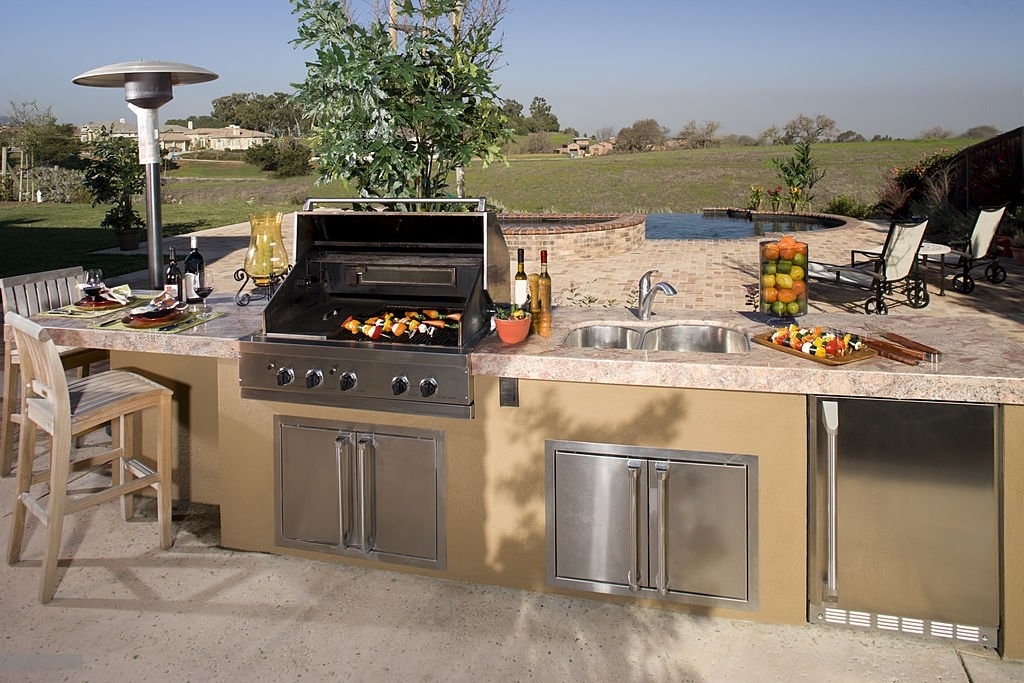
You don't need a sprawling outdoor kitchen, complete with a built-in grill, sink, fridge, and a dozen feet of counter space, to actually enjoy cooking outside. Plenty of homeowners just want that outdoor cooking and entertaining feel without signing up for the biggest, priciest version of the project, and there are several smart ways to capture most of that experience without draining your budget. If you're searching for an affordable patio contractor who can help you strike that balance, you're already asking the right question.
Most of the homeowners we talk to walk in thinking a full build is their only real option. Once they see a scaled-back setup laid out in front of them, though, they tend to realize it covers everything they actually wanted in the first place, and they end up just as satisfied with the smaller version.
What Drives Cost in a Full Outdoor Kitchen Build
Before looking at substitutes, it helps to know where the money actually goes in a full outdoor kitchen. Custom masonry or built-in cabinetry makes up a large share of the cost, since it involves framing, weatherproof material, and finish work that has to hold up outdoors year-round. Plumbing for a sink adds its own cost, since it usually means running water and drainage lines out to the patio. A long countertop run in a premium material like natural stone adds up fast per linear foot.
Once you see the project broken into pieces like this, it becomes a lot easier to spot which parts are worth keeping and which parts can be trimmed or swapped for something simpler.
Prefab and Modular Cabinetry Instead of Custom Masonry
Custom-built masonry islands look great, but they are one of the more expensive parts of an outdoor kitchen build. Prefabricated, weather-rated cabinetry gives you a similar finished look, storage space, and a mounting surface for a grill, without the labor cost of building a structure from scratch on-site.
Modular units also give you more flexibility down the road. If you want to expand the setup in a few years, you can add another module rather than reworking a fixed masonry structure.
A Single Grill Island Instead of a Full L-Shaped Layout
A full L-shaped or U-shaped outdoor kitchen layout looks impressive, but a single, well-built grill island can cover most of what people actually use an outdoor kitchen for on a regular basis. A built-in grill, a small section of counter space for prep, and maybe a side burner covers the core of outdoor cooking for most households without the added cost of a sink, refrigerator, and extra counter runs that may not get used every week.
Using Existing Patio Coverage Instead of Building a New Structure
A dedicated roof or structure over an outdoor kitchen adds real protection from the weather, but it also adds a meaningful chunk to the budget. If your patio already has a patio cover or pergola in place, positioning the cooking area underneath the existing structure gets you weather protection without building anything new specifically for the kitchen.
This works especially well for homeowners adding a grill island or modular kitchen to a patio that is already covered, since the structural cost has already been accounted for.
Simpler Countertop Materials That Still Hold Up
Natural stone counters look great, but they are one of the pricier options per square foot. Concrete countertops, either poured on-site or precast, hold up well outdoors and cost less than premium natural stone while still giving you a durable, easy-to-clean prep surface. Certain porcelain slab options also perform well outdoors and can come in at a lower price point than natural stone, depending on the specific product.
Where It Is Worth Spending More
Cutting costs does not mean cutting corners everywhere. A few areas are worth the extra investment even in a scaled-down build. The grill itself is one of them, since a mid-range built-in unit tends to last longer and perform better than the cheapest option available. Proper weatherproofing on any exposed wood or cabinetry also matters, since Colorado's temperature swings are hard on materials that were not built to handle them.
If you are trying to figure out where a scaled-down outdoor kitchen still delivers real value for your household, that is exactly the kind of conversation we walk through during a design consultation, looking at how you actually plan to cook and entertain before recommending a layout.