

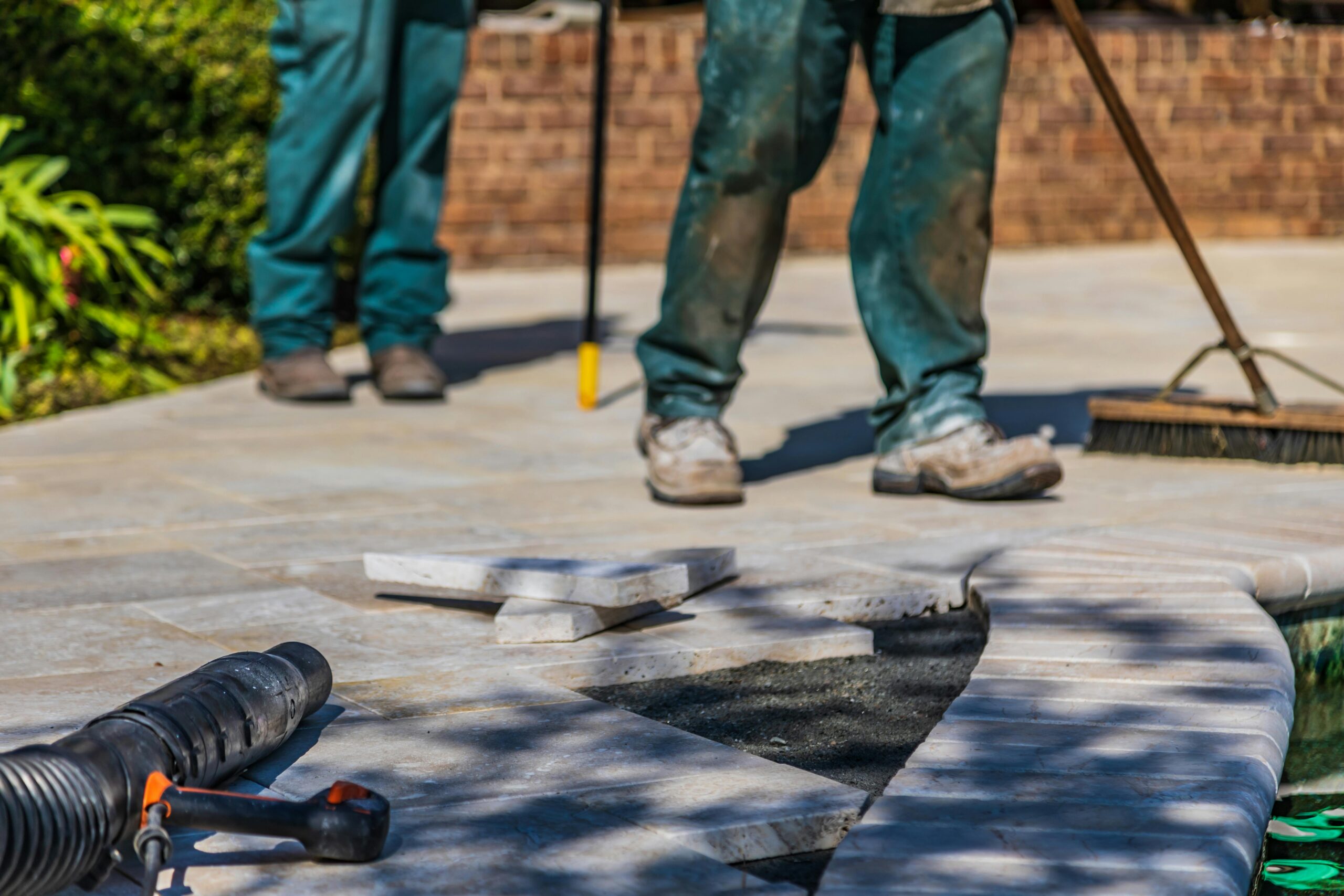
Paver patios are one of the most requested outdoor projects we build across the Denver metro area. They photograph well, hold up through Colorado’s freeze-thaw cycles, and give a backyard a finished look that plain concrete cannot match. But pricing varies enough that many homeowners start calling around for the best patio contractor without a realistic sense of what their specific project will actually cost. This breakdown covers what drives paver patio pricing in Denver, what ranges to expect in 2026, and what to watch for when comparing bids.
What Drives the Cost of a Paver Patio in Denver?
Several variables move the price of a paver patio project up or down, and square footage is only one of them. The type of paver material selected, the complexity of the pattern, the condition of the existing ground, and whether the site needs a retaining wall or grade correction all factor into the final number.
Colorado-specific conditions also affect cost in ways that homeowners coming from other states sometimes do not anticipate. Denver’s freeze-thaw cycle requires a deeper, more carefully prepared gravel and sand base than would be needed in a warmer climate. Cutting corners on base depth is the primary reason paver patios shift and sink over time. The base prep is not visible in the finished product, but it is what determines how long the patio holds up.
Paver Patio Cost Per Square Foot in Denver
In 2026, paver patio installation in the Denver metro area generally runs between $15 and $30 or more per square foot installed. That range reflects the full project cost, including material, base preparation, labor, and cleanup.
At the lower end of the range, you are looking at standard concrete paver units in a straightforward pattern on a site with level ground and good equipment access. At the upper end, natural stone pavers, complex patterns, custom borders, or sites that require significant excavation or retaining work push the number higher.
These are planning estimates. Exact pricing for any specific project requires an in-home assessment, because two patios that are the same square footage can differ by thousands of dollars depending on site conditions and material choices.
How Patio Size Affects Total Project Cost
Larger patios do not always cost proportionally more per square foot. Many fixed costs in a paver installation, including equipment, setup, and base material delivery, are spread across the total square footage. A 600-square-foot patio often carries a lower per-square-foot cost than a 200-square-foot patio from the same contractor.
This is one reason we recommend building to the full intended patio footprint during the initial installation rather than planning to add sections later. Adding to an existing paver surface is possible, but matching the existing pattern, color, and base depth adds cost. Building to the full footprint the first time is almost always the more cost-efficient path.
Material Choices and How They Change the Price
Concrete pavers are the most common material for Denver patio projects and sit at the lower end of the cost range. They are manufactured in consistent sizes and colors, which makes installation more predictable. Brands like Belgard and Unilock produce concrete pavers widely used in the Denver market, with options ranging from simple square units to textured, shaped designs with more visual complexity.
Natural stone pavers, including travertine, flagstone, and quartzite, cost more per unit and require more labor to install because of their irregular sizing and weight. The finished appearance is distinct from concrete pavers, and many homeowners find the natural variation in stone worth the added cost. For homes in higher-end Denver neighborhoods or being prepared for sale, natural stone often returns well in terms of curb appeal.
Brick pavers fall between concrete and natural stone in cost and give a classic look that works well in established Denver neighborhoods. They are less common in newer construction but are a strong option for homeowners wanting a traditional aesthetic.
Site Conditions That Add to Paver Installation Costs
Several site conditions push a paver project above the standard per-square-foot estimate. If the existing ground has significant slope, a retaining wall may be needed before any paving surface can be installed. That wall is a separate cost added to the paver work, but it is not optional when the grade change is significant enough to affect drainage or stability.
Limited access for equipment and material delivery also adds cost. Concrete trucks and compaction equipment need to reach the work site. A property with a narrow gate, a fully enclosed yard, or difficult terrain requires more hand work and takes longer to complete, which affects the labor portion of the estimate. Removal of existing concrete or hardscape is another variable: if there is an existing slab that needs to come out, that demolition and disposal adds to the total project cost.
Paver Patios vs. Stamped Concrete: Which Costs More and Why
Stamped concrete is the most direct comparison to a paver patio from a design standpoint. Both deliver a patterned, finished outdoor surface that looks significantly better than plain grey concrete. The cost difference between the two is real and consistent.
Stamped concrete installations run approximately $8 to $20 or more per square foot, compared to $15 to $30 or more for pavers. The lower cost of stamped concrete comes from faster installation, since it is a single pour rather than hundreds of individual units placed by hand. The trade-off is repairability. If a portion of a stamped concrete slab cracks or chips, fixing it to match the original finish is difficult. A damaged paver can be pulled out and replaced individually without disturbing the surrounding surface. Over time, the repairability of pavers can offset some of the higher upfront cost.
We build both paver patios and stamped concrete and can walk through the differences side by side during the consultation if you are deciding between them.
How to Budget for a Paver Patio Project in Denver
The most practical budgeting approach is to start with a realistic square footage for the intended space, apply the per-square-foot range to get a planning number, and then add a contingency for site conditions that may not be visible until the project begins.
For a 400-square-foot paver patio in the Denver suburbs using standard concrete pavers, a reasonable planning budget starts around $6,000 and can run to $12,000 or more depending on the site and material. That estimate changes if natural stone is selected, if a retaining wall is needed, or if site access is difficult.
Financing is available through our partnership with SVC Finance, including 0% interest options for qualified applicants. Pre-approval before the design consultation means you know your actual budget before any commitments are made. We also build patio covers, pergolas, and fire pits that are frequently added to paver patio projects, and bundling services in one contract is generally more efficient than phasing them separately.
Why Installation Quality Matters as Much as the Price
The per-square-foot figure on a quote rarely tells the full story. Two contractors quoting the same square footage at different prices may be using different base depths, different paver grades, or different compaction methods. Those differences do not show up in the finished product on day one. They show up in year three or five when sections start to shift.
We hold active Colorado contractor licenses, D20023 for concrete and D1090 for framing, and back every project with a lifetime warranty. That warranty applies to our paver installations the same way it applies to every other service we build. If something fails, we come back and fix it. No other patio contractor in the Denver area makes that commitment across their full range of services.
Our Google rating stands at 4.8 stars across 194 verified reviews. We are also recognized as the Best Outdoor Living Contractor in Denver Metro for 2025. Beyond paver patios, we build concrete patios, outdoor kitchens, retaining walls, and pergolas, and we can handle the full outdoor build under one contract if the project calls for it.
Related Topics: