

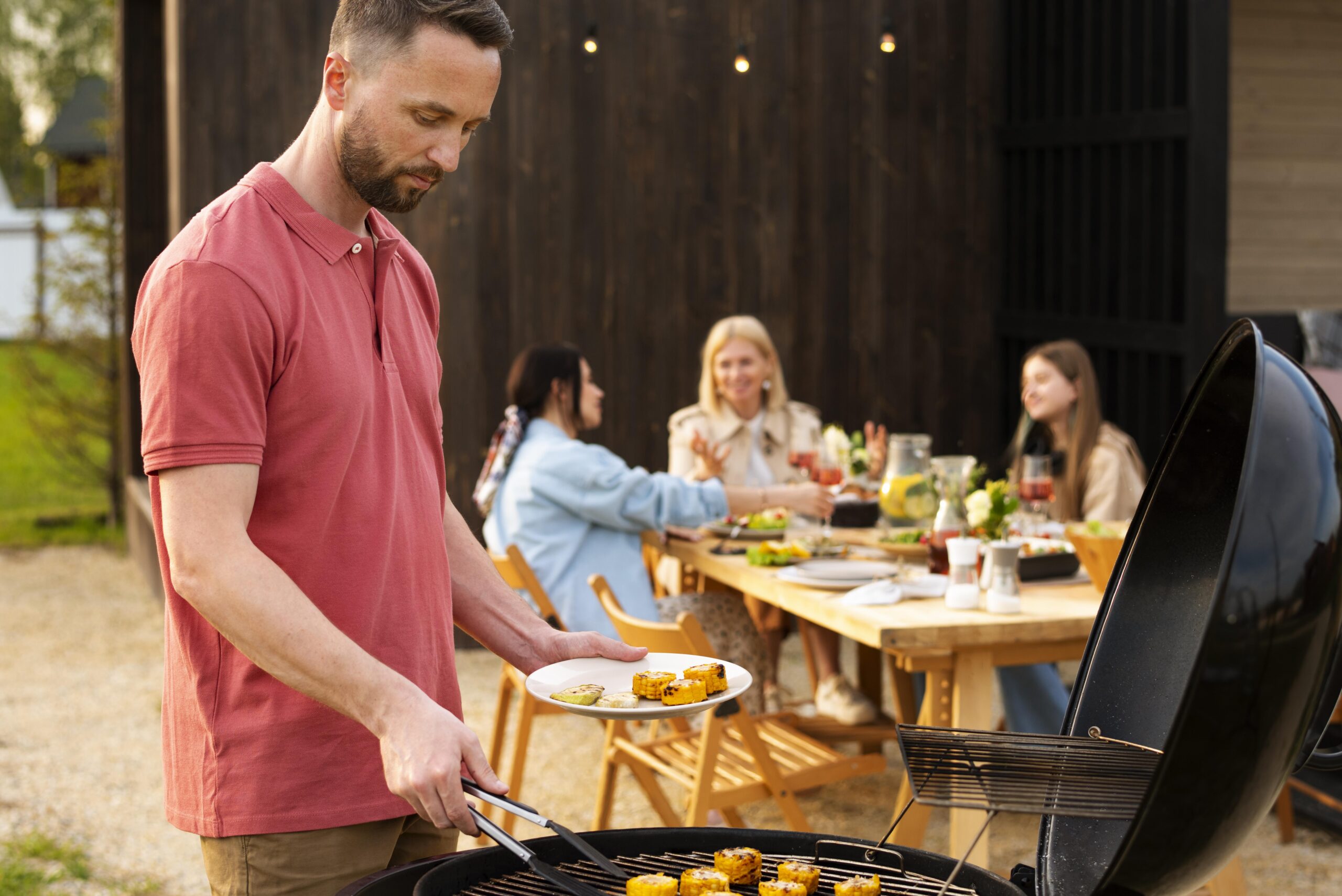
Most homeowners who plan an outdoor kitchen focus almost entirely on the cooking side: the grill, the counter space, the appliances. Ask any expert patio contractor what gets overlooked until the first dinner party, and the answer is always the social zone, which is where most outdoor kitchen designs fall short. Guests end up standing in the cook’s workspace, smoke drifts in the wrong direction, and the whole space feels cramped no matter how large the patio actually is. Planning the cooking zone and the social zone as two separate but connected areas from the start is what separates an outdoor kitchen you use constantly from one that gets used a few times and then sits quiet for the rest of the season.
Why Zone Design Matters for an Outdoor Kitchen
Zone design in an outdoor kitchen is not a cosmetic decision. It is a functional one. The cooking zone generates heat, smoke, and activity that does not mix well with a relaxed seating area. When these two areas are layered on top of each other, the cook is constantly navigating around guests, and guests either get too close to a hot grill or drift to the other side of the yard entirely.
Separating the zones while keeping them connected gives everyone a defined role in the space. Guests have a place to gather, pour drinks, and talk without being in the way. The cook has a clear work area to move through without interruption. The layout makes the space feel intentional rather than improvised.
The Cooking Zone: Function First
The cooking zone should be designed around how the cook actually works. That means thinking through the sequence of tasks: prep, cook, plate, and serve. Counter space on both sides of the grill lets you prep on one side and plate on the other without reaching across a hot surface. Storage below the counter keeps tools and supplies accessible without adding visual clutter to the workspace.
Ventilation matters more outdoors than most homeowners expect. Prevailing wind direction determines where smoke goes. Orienting the grill so that smoke moves away from the seating area, not toward it, is a detail that takes 10 minutes to work out during the design phase and makes every gathering better. Our team accounts for this during the site consultation by reviewing the yard’s typical wind patterns and the orientation of the outdoor space.
Heat from a grill also radiates into the surrounding area, which is worth considering when placing a patio cover or pergola overhead. A solid patio cover directly above a high-output gas grill traps heat and smoke. An open or louvered structure lets both rise and dissipate naturally, which is more comfortable for everyone near the cooking area.
The Social Zone: Designing for Guests
The social zone is where guests spend most of their time, which means it should be the most comfortable part of the outdoor space. Seating that faces the cooking area rather than turning away from it keeps the cook involved in conversation without forcing everyone to crowd around the grill. Comfortable furniture, shade from a pergola or patio cover, and an accessible surface for drinks and plates are the practical basics every social zone needs.
A fire pit positioned at the far edge of the social zone extends how late the space gets used. Denver evenings cool off faster than most people from warmer climates expect, even in summer. A fire pit draws guests toward the warmth and keeps the gathering going an hour or two longer than it would otherwise. Lighting in the social zone, including string lights above the seating area, low pathway lighting along the patio edge, and accent lighting on pergola posts, shapes the mood of the space significantly after dark.
The Transition Between Zones: Bar Seating Works Best
The most effective way to connect the cooking and social zones without blending them into each other is through a counter with bar seating on the guest-facing side. Guests can sit at the counter, watch the cook work, and hold a conversation without stepping into the cooking workspace. Drinks can be passed across the counter without anyone needing to move. The bar counter creates a natural boundary between the two zones while keeping the energy of both connected.
Bar height counters work best for this function. Standard outdoor kitchen counters are at prep height, which is too low for comfortable bar stool seating. A raised bar section on the guest-facing edge of the cooking counter solves this without requiring a separate structure. The material used for the bar counter, whether concrete, stone, or tile, can match or complement the paver patio or concrete surface surrounding the kitchen.
How the Patio Surface Ties the Zones Together
The patio surface beneath an outdoor kitchen plays a larger role in how the zones feel than most homeowners anticipate. Using the same paver or concrete surface across the full outdoor area creates visual continuity that makes the space read as one cohesive design. Using different materials for the kitchen area versus the seating area can work aesthetically, but it requires deliberate planning during the design phase to avoid looking accidental.
Non-slip surface texture matters specifically in the cooking zone. Outdoor kitchen areas can get wet from spills, drink condensation, and steam from cooking. A smooth, polished paver surface or sealed concrete becomes slippery when wet. A brushed or textured finish in the cooking zone is the more practical choice, while a smoother finish in the seating area can still look clean and refined.
Shade and Coverage Over Each Zone
Colorado’s afternoon sun is one of the strongest arguments for covering at least the social zone of an outdoor kitchen space. From June through August, a south or west-facing patio bakes in heat that makes comfortable seating nearly impossible without shade. A pergola over the seating area provides partial coverage and airflow. A solid patio cover provides full protection from sun and from the afternoon thunderstorms that move through Denver regularly in summer.
The cooking zone generally benefits from a more open structure overhead. Louvered pergola systems offer a practical compromise, giving the option to open the roof in the cooking area for smoke and heat dissipation and close it over the seating area for shade and storm protection. This kind of zoned coverage approach is something our team designs into outdoor kitchen projects from the start, not as an afterthought.
HOA Considerations for Outdoor Kitchen Builds in Denver
Most Denver metro HOA communities require approval before an outdoor kitchen can be built. The submission typically includes design plans showing dimensions and placement, material and color specifications, and structural details for any overhead elements like pergolas or patio covers. HOA approval timelines in communities like Highlands Ranch, Centennial, and Parker typically run two to six weeks.
About 85% of our clients are in HOA communities, and we manage all HOA paperwork and approval submissions on their behalf. If the outdoor kitchen design includes a retaining wall for a sloped yard or an overhead structure that approaches HOA height limits, we factor those constraints into the design before anything is finalized. Building before approval is issued creates problems that are expensive and time-consuming to resolve.
Why Work With Us on Your Denver Outdoor Kitchen
We build outdoor kitchens as part of a complete outdoor living design, not as a standalone add-on to someone else’s patio. Our team handles the full project from design consultation through final walkthrough, including the patio surface, any overhead structures, the kitchen structure itself, HOA submissions, and finishing details. There are no subcontractor hand-offs and no coordination gaps mid-project.
We have been building outdoor living spaces across the Denver metro area since 1990. Our team holds active Colorado contractor licenses, D20023 for concrete and D1090 for framing, and backs every project with a lifetime warranty. Our Google rating is 4.8 stars across 194 verified reviews, and we were recognized as the Best Outdoor Living Contractor in Denver Metro for 2025.
Financing is available through SVC Finance, including 0% interest options for qualified applicants, which makes a full outdoor kitchen and patio build more accessible without requiring the full cost upfront.
Related Topics: