

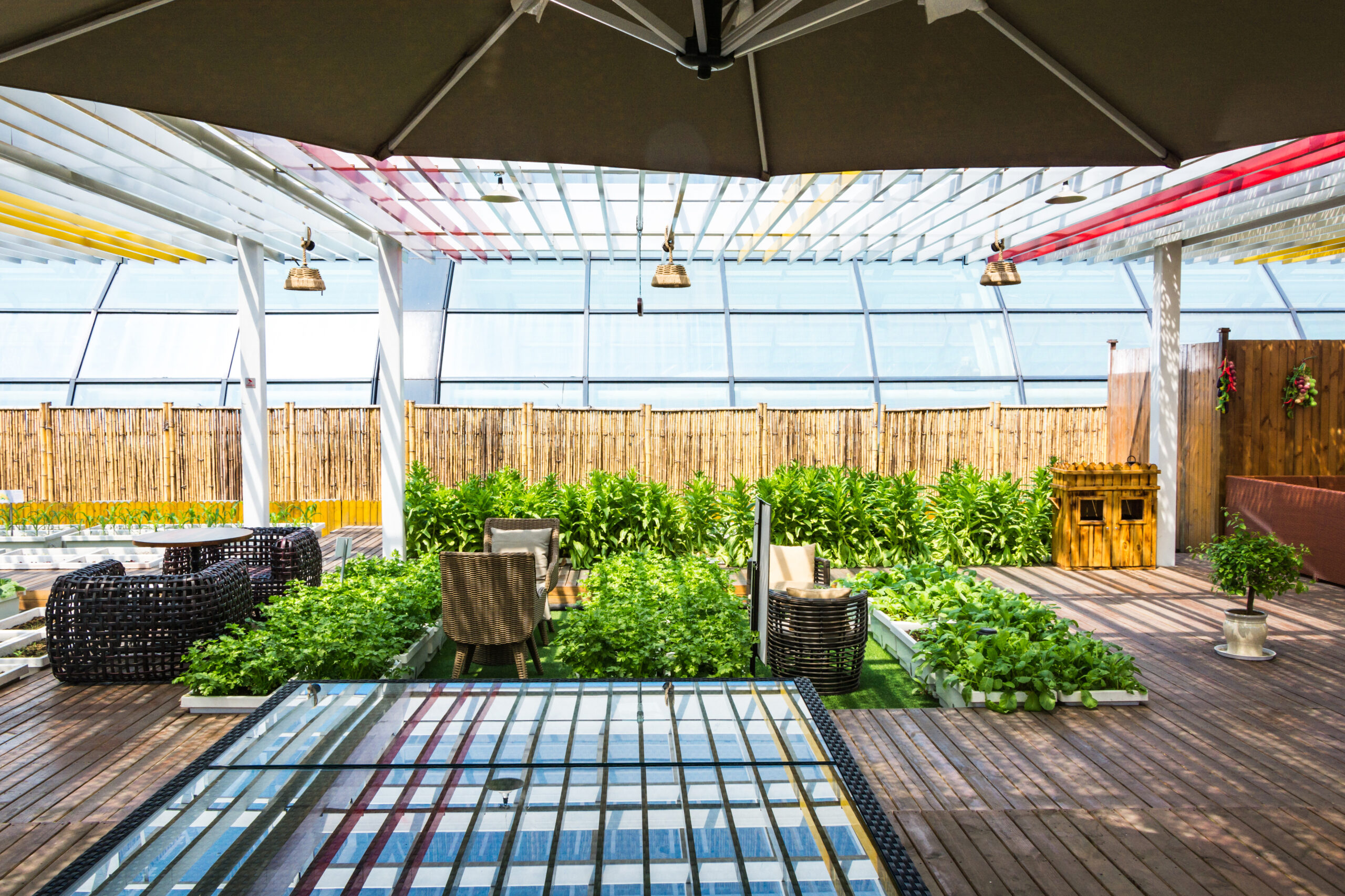
A pergola on its own provides filtered shade. A pergola with a plant canopy woven through it provides something closer to a full outdoor room. The structural beams do the heavy lifting: holding shape, handling Colorado snow load, giving the climbing plants a framework to grow on. The plants fill in the gaps with coverage, texture, and seasonal change that no manufactured material produces.
The questions below cover what Denver homeowners most commonly ask an affordable patio contractor in Denver about combining a pergola structure with climbing plants or overhead greenery.
What is shade layering on a pergola?
Shade layering is the practice of combining a pergola’s structural frame with one or more additional shade elements to build up coverage progressively. The pergola provides the base layer: open beams that deliver partial shade and define the space. The second layer is typically climbing plants, shade cloth, or a combination of both. Some homeowners add a third layer with a partial solid panel on one side for weather protection.
The result is a space that feels covered without feeling enclosed. Light filters through at different levels depending on how dense the plant coverage becomes and how the structure is oriented. In Denver’s climate, where direct afternoon sun is intense but the air is dry and the shade is pleasant, a layered pergola can make an outdoor space genuinely comfortable through most of the summer.
The key distinction between shade layering and simply installing a solid patio cover is that layering preserves the open, garden-feel quality that makes a pergola worth choosing in the first place.
What climbing plants work best on a Denver pergola?
Plant selection for a Denver pergola comes down to three factors: cold hardiness through Colorado winters, tolerance for UV intensity at 5,280 feet elevation, and how aggressively the plant grows relative to how much maintenance you want to do.
Wisteria is visually striking and produces heavy coverage, but it is aggressive and requires consistent pruning to keep it from overloading the pergola structure. It is hardy to USDA Zone 5, which covers most of the Denver metro.
Climbing roses are a popular choice for HOA communities because they are widely accepted by architectural review committees and look finished from the street. They require annual pruning and some winter protection in Denver’s colder zones.
Trumpet vine grows fast, produces dense coverage, and handles Colorado heat and UV well. The trade-off is that it spreads aggressively, both along the pergola and into nearby beds. It works best where you can manage its spread.
Virginia creeper is one of the most reliable performers in the Denver climate. It handles both full sun and partial shade, tolerates freeze-thaw cycling well, and produces strong fall color before going dormant. Lower maintenance than most climbing options.
Clematis offers a wide range of bloom times and coverage styles depending on the variety. It climbs without as much spread as trumpet vine, which makes it easier to manage on a pergola with a defined footprint.
For homeowners who want coverage without waiting multiple seasons for a plant to establish, a combination approach works well. Fast-growing annual vines provide immediate coverage in the first year while a slower perennial plant establishes underneath.
Does shade layering with plants affect pergola structure or warranty?
The structural impact of climbing plants depends on the plant weight and how it accumulates over time. Most climbing vines, when managed with annual pruning, add minimal structural load to a properly built pergola. The issue arises when plants are left unmanaged for multiple seasons and woody vines become heavy enough to stress connections or add meaningful snow load on top of already loaded beams.
For an aluminum pergola, plant weight is less of a concern than for wood because the material does not absorb moisture from the root zone of plants growing up the posts. For a wood pergola, climbing plants that hold moisture against the post base, particularly in Colorado’s wet spring and early summer, can accelerate surface degradation at the contact point if the wood is not well-sealed at installation.
Our pergola installations are covered by a lifetime warranty that covers structural integrity. We are the only outdoor living contractor in Denver and in Colorado offering a lifetime warranty across all services, including pergolas. The warranty holds when plants are managed with normal care. We walk through plant compatibility and maintenance expectations during the design consultation so homeowners know what to expect before the first growing season.
How do you layer shade on a pergola without blocking too much light?
The goal of layering is to control light, not eliminate it. The starting point is the pergola’s beam spacing. Wider spacing between rafters lets more light through and gives climbing plants room to spread without producing an immediately dense canopy. Tighter rafter spacing produces faster coverage and a fuller look from day one.
Beyond structure, shade cloth is the most controllable layering tool. It is available in density ratings from 30% block for light filtering up to 90% block for near-solid shade. A 40 to 60% density cloth over a Denver pergola cuts the intensity of afternoon sun without making the space feel dark. It can be installed seasonally, put up in June and taken down in September, which also removes any snow load concern through winter.
Climbing plants provide less controllable coverage but a more natural result. The density builds over multiple growing seasons, which gives you time to adjust. Pruning controls where and how densely coverage concentrates. Keeping the south-facing rafter runs more open while allowing the west-facing side to fill in more densely is a common approach for managing afternoon sun without eliminating light.
For homeowners who want more coverage on one side than another, such as blocking western afternoon sun while keeping the space open to the north and east, a combination of shade cloth on the targeted side with climbing plants on the rest of the structure gives you that control.
Can you combine a pergola with a partial patio cover for more weather protection?
Yes, and this is one of the more functional configurations for Denver homeowners who want the aesthetic of a pergola but also want protection from afternoon thunderstorms in July and August.
The typical approach is an attached pergola with a solid panel or insulated panel section covering the primary seating or dining area, usually the portion nearest the house, while the remaining rafter section stays open with shade cloth or climbing plant coverage. The solid section handles rain and direct sun during the hottest part of the afternoon. The open section stays light and airy for the rest of the time.
Structurally, this configuration works best when it is designed together from the start rather than retrofitting a cover onto an existing pergola. The connection points, load distribution, and pitch of the solid panel all need to account for Colorado snow load requirements, which are easier to engineer correctly at the design stage.
Our design-to-build process handles combination structures, a pergola paired with a patio cover, under one contract designed as a single project rather than two separate additions. We have completed this configuration across HOA communities in Centennial, Lone Tree, Inverness, and surrounding areas, handling all approval documentation for both structure types in one submission.
Does adding climbing plants to a pergola require HOA approval?
In most HOA communities, the pergola structure itself requires architectural review and approval before construction. Whether the plants trained onto it require separate approval depends on your specific HOA’s governing documents.
Some HOAs, particularly those with detailed landscaping guidelines, regulate climbing plants especially on structures visible from the street or adjacent lots. Common restrictions cover plant species, the height plants can reach, and whether vines can cross property lines.
The practical approach is to confirm plant restrictions with your HOA at the same time you submit the pergola application. Our team handles the full approval process for pergola installations, including identifying relevant plant or landscaping restrictions that might affect your design. 85% of our projects are in HOA communities, and we know the standard requirements across the communities we work in regularly.
If plant species are a concern for your specific HOA, we walk through compliant options during the design consultation so the finished result works within your community’s guidelines from day one.
What pergola materials hold up best when plants are growing on them in Colorado?
Aluminum is the best-performing pergola material for climbing plant applications in Colorado. It does not absorb moisture, does not develop the surface degradation that wood can at plant contact points, and holds up through both UV intensity and freeze-thaw cycles without requiring the maintenance that wood needs to maintain the same structural integrity.
For homeowners who want the natural look of wood alongside climbing plants, cedar holds up better than treated pine in Colorado’s climate. The combination of UV and moisture cycling is harder on softwoods, so the sealing and staining schedule matters more with a wood pergola in a plant-layered application than it would in a purely structural installation.
Powder-coated aluminum pergola posts and beams also hold up better than bare wood against the soil contact zone at the base of climbing plants. Colorado’s soil moisture cycling, with dry summers and wet springs, is hard on unsealed wood at grade level.
Our team selects materials based on Colorado’s specific conditions and the intended use of the structure. Our customers reflect that approach: 4.8 stars across 194 Google reviews from homeowners who use these spaces daily.A free in-home consultation is where we work through material options, plant compatibility, and the full design of the space. Written estimate included, no obligation. Financing is available through SVC Financial, including 0% interest options for qualifying projects.
Contact Us
Need help designing or building your dream outdoor space? Reach out to Denver Patio Masters, Colorado’s patio and outdoor living specialists.
Address: 8200 S Quebec St, Suite A3703, Centennial, CO 80112
Phone: (720) 594-0235
Email: info@denverpatiomasters.com
Business Hours: Monday–Sunday: 9:00 AM–5:00 PM
Whether you’re ready to start a project or want a free consultation, give them a call, send an email, or visit their contact page to connect with the team and begin transforming your outdoor living space.
Related Topics: