

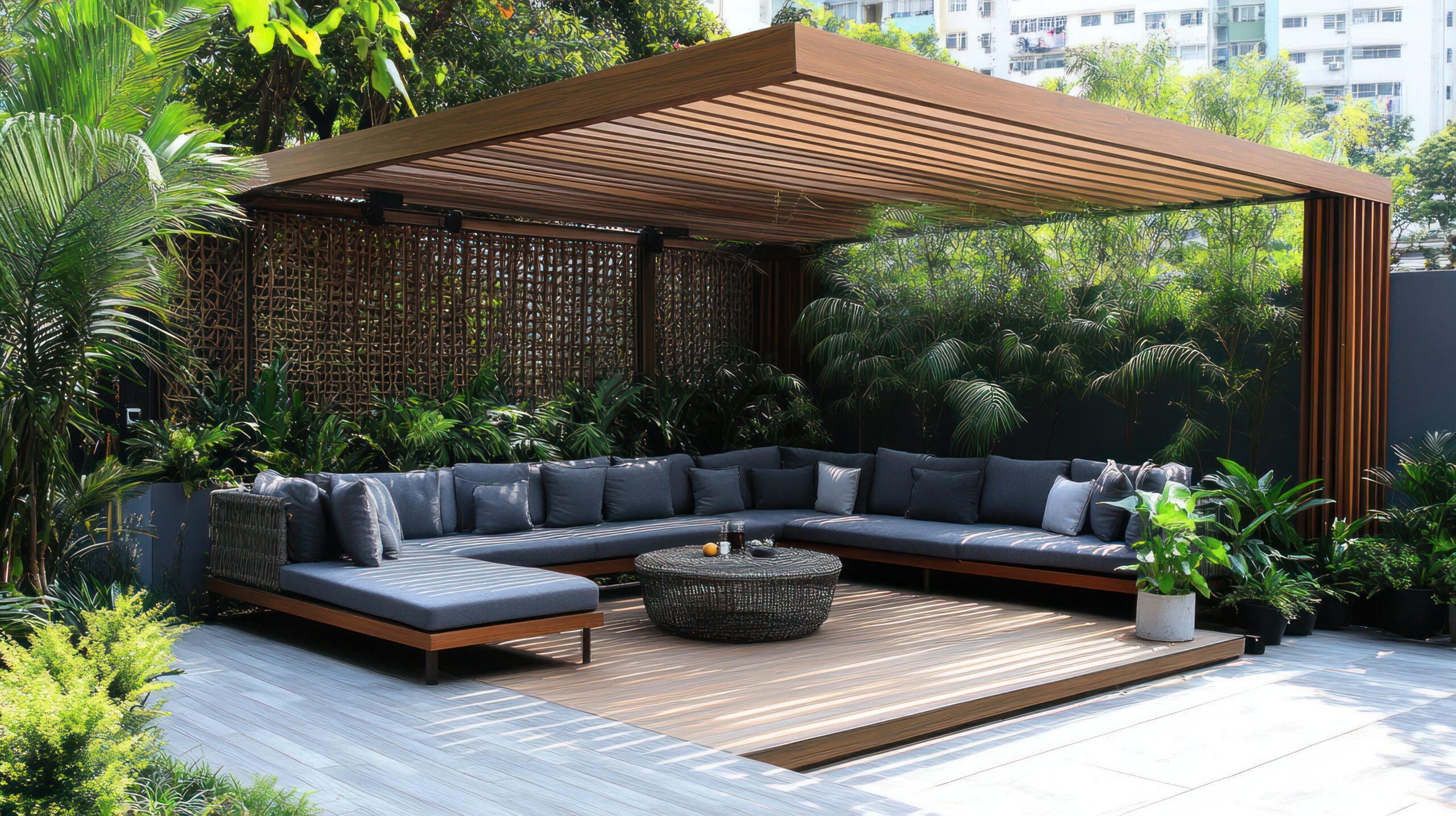
Picking the right pergola style is not purely an aesthetic decision. The materials, proportions, and finish all play a role in how well a structure holds up in Colorado’s climate, whether it passes an HOA design review, and how it photographs if the home ever hits the market. If you have been researching modern patio services or browsing the portfolios of expert patio designers, you have probably noticed that both modern and traditional pergola styles show up in Denver backyards for good reason. They each work well here. The difference comes down to the home, the neighborhood, and what the homeowner actually wants out of the space.
At Denver Patio Masters, we design and build pergolas across the full style range, from clean aluminum structures to classic wood builds. After working across the Denver metro area, we have developed a solid sense of what fits where and why.
What Defines a Modern Pergola
A modern pergola is defined by clean lines, minimal ornamentation, and a structure that reads as geometric rather than decorative. The posts are typically square rather than tapered, the beams are straight and evenly spaced, and the overall silhouette feels architectural.
Aluminum is the dominant material in modern pergola design. It can be fabricated into precise profiles that hold their shape over time without painting, staining, or seasonal maintenance. Powder-coated aluminum pergolas are available in a range of colors, with dark charcoal, matte black, and warm bronze being the most popular choices in Denver-area installations.
Some modern pergola systems include motorized louver roofs that adjust with a remote control, allowing the homeowner to open the structure fully on a clear day or close it against an afternoon rainstorm. These adjustable systems sit at the higher end of the price range but add a level of functionality that traditional pergolas do not match.
What Defines a Traditional Pergola
A traditional pergola draws from classic garden architecture that has been common in residential design for generations. Rounded post tops, decorative notching on the beam ends, tapered columns, and a lattice or cross-beam roof pattern are the signature elements. The overall effect is one of warmth and character rather than clean geometry.
Wood is the primary material for traditional pergola construction. Cedar and redwood are the most common choices because both resist moisture and insects better than standard pine. Pressure-treated lumber is another option, though its tone typically requires paint or stain to achieve the warm wood appearance most homeowners are after.
Traditional pergolas can be stained, painted, or left to weather naturally over time. This flexibility in finish is one of their design advantages: the wood can be matched to the home’s trim color, the existing fence, or left in a warm natural tone that ages gradually.
Material Comparison: Aluminum vs. Wood in Colorado’s Climate
Colorado’s climate is the most relevant factor in the material decision for any homeowner in the Denver metro area. The state’s intense UV exposure, freeze-thaw cycling, and afternoon hailstorms put outdoor wood structures through significantly more stress than in mild-weather markets.
Aluminum handles Colorado conditions with minimal intervention required. It does not rot, warp, crack, or require annual sealing. A well-installed aluminum pergola can hold its finish and structural integrity for 20 or more years without significant maintenance. The same UV levels that dry out and fade wood surfaces have far less effect on a powder-coated aluminum frame.
Wood pergolas require more ongoing attention in Colorado. The UV levels at Denver’s elevation require resealing or restaining every two to three years to prevent the wood from drying out, cracking, and eventually developing structural problems. A properly maintained cedar or redwood pergola holds up well for many years, but the homeowner needs to be prepared for that maintenance schedule before making the investment.
HOA Considerations for Pergola Style in Denver Suburbs
HOA design guidelines across Denver suburbs like Highlands Ranch, Castle Pines, Lone Tree, and Greenwood Village typically address pergola construction in some form. Common restrictions include height limits on freestanding and attached structures, requirements that materials and colors complement the home’s exterior, and in some cases, restrictions on motorized or mechanical elements.
Height limits are the most common constraint. Most Denver suburb HOAs cap freestanding pergola structures at a specific height above grade. Knowing that limit before finalizing the design prevents having to redesign a structure that has already been measured and priced.
Color requirements tend to favor earth tones and neutral palettes, which align naturally with both modern aluminum finishes and stained wood tones. HOA boards rarely push back on colors in the brown, grey, charcoal, or warm bronze range.
We manage all HOA submissions for our clients and know what each community’s design review board typically requires. Getting a pergola approved is a standard part of our project process, not an obstacle we leave homeowners to navigate on their own.
Freestanding vs. Attached Pergolas
Both configurations are common in Denver backyards, and the choice is largely driven by the layout of the property and the homeowner’s intended use. An attached pergola connects directly to the home’s exterior wall, giving it a more integrated look and creating a shaded transition zone between the interior living space and the patio.
A freestanding pergola can be positioned anywhere on the patio, giving more flexibility in placement and the option to create a defined outdoor zone separate from the house structure. On larger patio surfaces, a freestanding pergola over the dining area and an attached patio cover over the cooking zone is a common and functional pairing.
From a structural standpoint, attached pergolas tie into the home’s wall and require proper fastening to avoid water intrusion at the ledger connection. Freestanding pergolas are independent structures that need solid footings to remain plumb through many Colorado winters.
How Pergola Style Affects Listing Photos and Resale Value
For homeowners who expect to sell within five to ten years, the pergola style has a real effect on how the outdoor space photographs and how buyers perceive the home’s value. Paver patios and well-proportioned shade structures are consistent selling points in Denver-area listings.
Modern aluminum pergolas tend to photograph well with contemporary and transitional home styles that are common in Centennial, Highlands Ranch, and newer Parker developments. The clean geometry reads well in listing photos and signals low maintenance to buyers.
Traditional wood pergolas photograph beautifully when well-maintained and fit naturally with craftsman, ranch, and colonial-style homes more common in established Denver neighborhoods. Either style adds perceived value when it looks well-built and intentional. The opposite is equally true: a pergola that is visibly weathered or mismatched with the home’s exterior detracts from the overall impression.
Our Pergola Design and Build Process
We build pergolas as standalone projects and as part of full outdoor builds that include concrete and paver patio surfaces, fire features, outdoor kitchens, and retaining walls. Every pergola we build carries our lifetime warranty. We are the only patio contractor in the Denver area offering this coverage.
Our 4.8-star Google rating is based on 194 verified reviews, and our team has completed hundreds of pergola builds across the Denver metro and Colorado Springs area. We ranked No. 566 on the Inc. 5000 list of fastest-growing private companies in America in 2024.
Related Topics: