

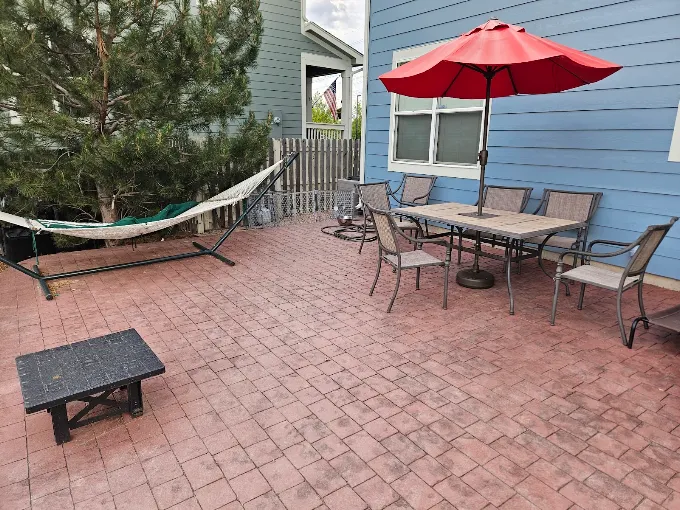
Pavers shift and settle when the ground beneath them moves. A stable patio needs proper excavation, a compacted aggregate base built in thin layers, firm edge restraint, and a slope that moves water away. Our team at Denver Patio Masters handles paver patio installation across the Denver metro, and the base under each patio matters more than the pavers on top.
What Causes Pavers to Shift and Sink
Settlement is the slow sinking of pavers into soft or poorly compacted material underneath. Shifting is sideways movement, where pavers creep apart, open their joints, or roll at the edges.
Both trace back to three layers under the surface: the subgrade, which is the native soil; the base, a thick course of crushed aggregate; and the bedding layer, a thin course of sand or fine aggregate the pavers sit on.
Water and frost do most of the damage. When soil under a patio stays wet, it loses strength, and in a Colorado winter that moisture freezes, expands, and lifts the pavers before thawing and letting them drop. Clay soils also swell when wet and shrink when dry. A base that drains well and spreads the load evenly keeps those forces from reaching the surface.
Excavation Depth and Subgrade Prep
Good base prep starts with digging deep enough. The excavation has to make room for the base, the bedding layer, and the paver thickness, plus any extra depth the soil and the patio’s use call for.
Areas that carry heavier loads, such as a grill station, need more base than a seating area, and skimping on depth is a common shortcut behind sunken pavers. We cover that question in more detail in our post on how deep to dig for pavers.
Once the area is dug, the subgrade gets attention before any stone goes in. Soft spots, roots, and organic soil come out, and the native soil is compacted with a plate compactor so it can carry the base.
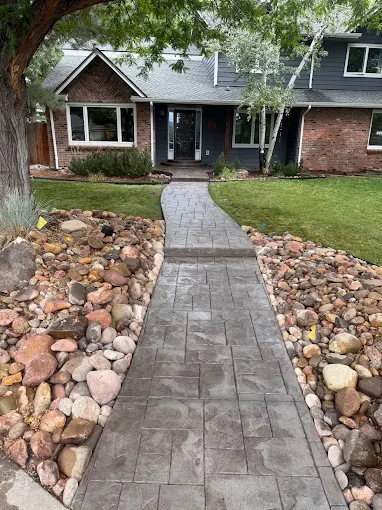
In heavy clay, a geotextile fabric between the subgrade and the base keeps the two layers from mixing over time. The subgrade should also follow the final slope of the patio, so water that reaches it keeps moving instead of pooling in a low spot.
How a Compacted Base Is Built in Layers
The base is a layer of crushed angular aggregate, and its job is to spread weight and let water pass through. Angular stone locks together when compacted, while rounded gravel rolls and stays loose.
Many installers follow guidance from the Interlocking Concrete Pavement Institute (ICPI) on base materials and thickness. Here is what each layer does and what goes wrong when it is skipped.
| Layer | Purpose | What Happens If It’s Done Incorrectly |
| Compacted subgrade | Supports everything above it | Soft spots sink and pull pavers down |
| Geotextile fabric (when soil calls for it) | Separates soil from base | Clay works into the base and weakens it |
| Crushed aggregate base, compacted in lifts | Spreads loads and drains water | Uneven settling and frost heave |
| Bedding layer | Gives pavers a level bed | Pavers rock, tilt, or sit at different heights |
| Edge restraint | Holds the field of pavers in place | Edges spread and joints open |
| Joint sand | Locks pavers together | Pavers twist and drift under foot traffic |
Compacting in lifts is the technique that separates a lasting base from a weak one. Instead of dumping the full depth and compacting only the top, the aggregate goes down a few inches at a time, gets moistened, and is compacted before the next lift.
A single thick layer of loose stone leaves the bottom soft, and that soft zone is where settlement starts a few seasons later. Our post on base materials for laying pavers compares the common aggregate choices.
Planning a paver patio for your yard? Book your free design consultation and talk through your soil, slope, and layout with our team.
Bedding, Edge Restraint and Slope
The top layers hold the surface together. The bedding layer is screeded to an even depth and never used to fill low spots in the base, because extra sand in one area compresses more than the rest.
Pavers go down on that bed and are compacted into it, then joint sand is swept in and compacted again to lock the units together. Before any work starts, ask your installer about these points.
- How deep the excavation will be, and why that depth suits your soil
- Which aggregate the base uses and how thick each compacted lift will be
- Whether geotextile fabric is needed under the base
- What type of edge restraint will hold the perimeter
- Which way the patio slopes and where the water goes
Edge restraint is easy to overlook because it disappears under soil or mulch. Plastic, metal, or concrete edging anchored into the base keeps the perimeter pavers from creeping outward, and once the edge moves, the rest of the patio follows.
The surface also needs a gentle fall away from the house so rain and snowmelt run off rather than soak in, a subject our post on paver patio slope covers on its own.
How We Handle Paver Base Work
Base prep is the part of a paver patio you never see once the job is done, so ask about it before you sign anything. Every project with our team starts with a free in-home design consultation and estimate, where we look at your yard and design the patio with you.
Pricing depends on the size, the design complexity, and the finishes you choose, and financing is available, including 0% interest options with approved credit.
We offer a lifetime warranty on our work. Ask for the written warranty terms with your estimate. Owner Marty Toma has worked in home improvement since 1990, and in November 2026, the Google review widget on our website showed a 4.8-star rating from 194 reviews.
If your neighborhood has an HOA, our team handles the approval process, which about 85% of our customers need.
Ready to plan your paver patio? Book your free design consultation or call 855-CO-PATIO (855-267-2846), Monday to Sunday, 9:00 AM to 5:00 PM.
Related Topics: