

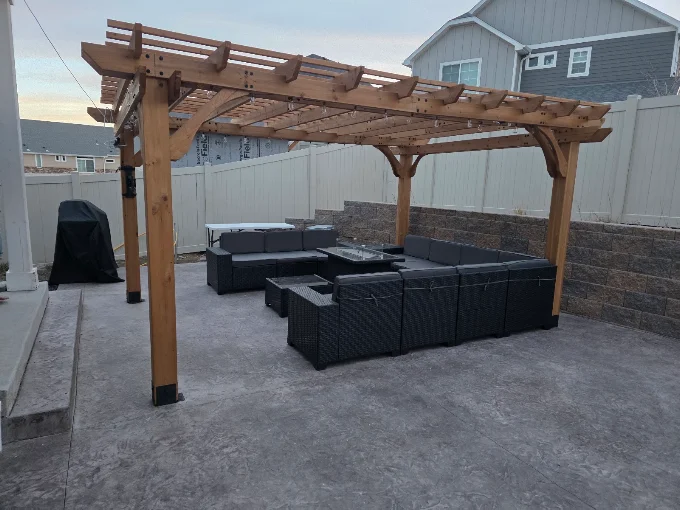
The most promising sustainable patio cover materials today are recycled aluminum, recycled-content composites, responsibly sourced wood, reflective cool-roof panels, and solar-ready roofs. Each one cuts waste, energy use, or heat in a different way.
Our team at Denver Patio Masters designs and builds patio covers across the Denver metro, for new patios and existing slabs alike.
What Makes a Patio Cover Material Sustainable
A sustainable cover material does at least one of three things. It uses recycled or renewable content, it lasts long enough that it does not need replacing, or it lowers the heat and energy load around the house. A material that checks one box can still miss another, and recycled content means little if the product fails after a few hard winters and ends up in a landfill.
Durability carries extra weight under Colorado conditions. High-altitude sun breaks down many plastics and finishes faster than sun at lower elevations, and snow, hail, and freeze-thaw cycles put stress on every joint.
The greenest cover is often the one built to last with little upkeep, because each repaint, resealing, or replacement adds material and energy to its lifetime cost. Ask any maker how its finish holds up to UV over time, and look for published test results rather than marketing language.
Recycled Aluminum and Composite Options
Aluminum can be recycled repeatedly without losing strength, and many aluminum patio cover systems contain recycled metal. It does not rot, and a factory powder-coated finish removes the need for regular painting.
At the end of its life, the frame can go back into the recycling stream instead of a landfill. Green claims vary from product to product, so these questions help separate real benefits from marketing:
- How much recycled content does the product contain, and is it documented?
- Can the material be recycled or reused at the end of its life?
- How is the finish rated for UV exposure?
- How often does it need sealing, painting, or other upkeep?
- Does the manufacturer publish snow and wind ratings for it?
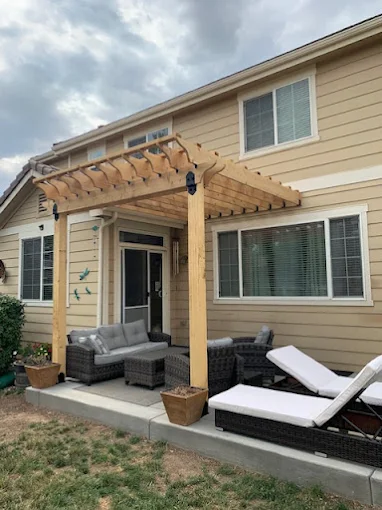
Composites blend recycled plastics with wood fibers or other fillers. They resist rot and insects and keep plastic out of landfills, though they expand in heat, so spans and fastening need to follow the manufacturer’s guidance.
Insulated roof panels, which sandwich foam between metal skins, are another choice for solid covers and keep the patio underneath cooler on summer afternoons. Our post comparing patio cover materials for Denver weather looks at durability side by side.
Wood, Cool Roofs and Lighter Finishes
Wood is renewable, and responsibly sourced or reclaimed lumber gives a warm look with a smaller footprint. Look for Forest Stewardship Council (FSC) certification, or ask where reclaimed lumber came from. Wood needs regular sealing or staining in a dry, sunny climate, so count that upkeep in the green math.
| Material | Sustainability Benefits | What to Check |
| Recycled aluminum | Recycled content, recyclable at end of life, no repainting | Share of recycled content, UV rating of the finish |
| Composite lumber | Uses recycled plastic and wood fiber | Heat expansion, span limits, color fading |
| FSC-certified or reclaimed wood | Renewable or reused material | Sealing schedule, rot resistance, sourcing records |
| Cool-roof panels | Reflect sunlight, cut heat under the cover | Solar reflectance rating, glare toward neighbors |
| Solar-ready roof | Can produce electricity while giving shade | Structural capacity, snow shedding, permit steps |
Cool-roof materials take a different approach. Light-colored or specially coated panels reflect more sunlight and absorb less heat, which keeps the patio below cooler and reduces heat reaching nearby windows. Ventilated designs, with gaps at the ridge or adjustable louvers, let hot air escape. Our post on patio cover ventilation and heat control covers that side of comfort.
Weighing greener materials for a new patio cover? Book your free design consultation and talk through the options with our team.
Solar-Ready Patio Covers
Solar-integrated covers use photovoltaic panels as the roof itself, or mount panels on top of a solid roof, so the structure produces electricity while it shades the patio.
Some homeowners build a cover now with framing and roof pitch planned for panels later, which spreads out the cost and keeps the option open. Panel output also depends on roof angle and on shade from nearby trees or the house itself.
Solar adds weight, wiring, and paperwork. The structure has to carry the panels plus snow, the electrical connection needs a qualified electrician, and utilities and building departments often have their own approval steps.
Panels also shed snow differently than a standard roof, so think about where that snow lands. Talk with a solar installer and your HOA before committing to a solar-ready design.
Planning a Greener Patio Cover With Our Team
Material is only part of a sustainable cover. Placement matters as much: a cover over a west-facing patio blocks the hottest afternoon sun from the house, and a cover sized to the way you use the space avoids building more than you need.
A cover that shades a patio door or large window can also cut heat gain inside the home on summer afternoons. HOA rules can limit roof colors and solar panels, so settle those questions early.
Every project with our team starts with a free in-home design consultation and estimate. We look at your yard, listen to what you want, and design the cover to fit, whether it goes over a new patio or your existing concrete slab.
About 85% of our customers need HOA approval, and we handle that process for them. Financing is available, including 0% interest options with approved credit. We offer a lifetime warranty on our work. Ask for the written warranty terms with your estimate.
Ready to plan your patio cover? Book your free design consultation or call 855-CO-PATIO (855-267-2846), Monday to Sunday, 9:00 AM to 5:00 PM.
Related Topics: