

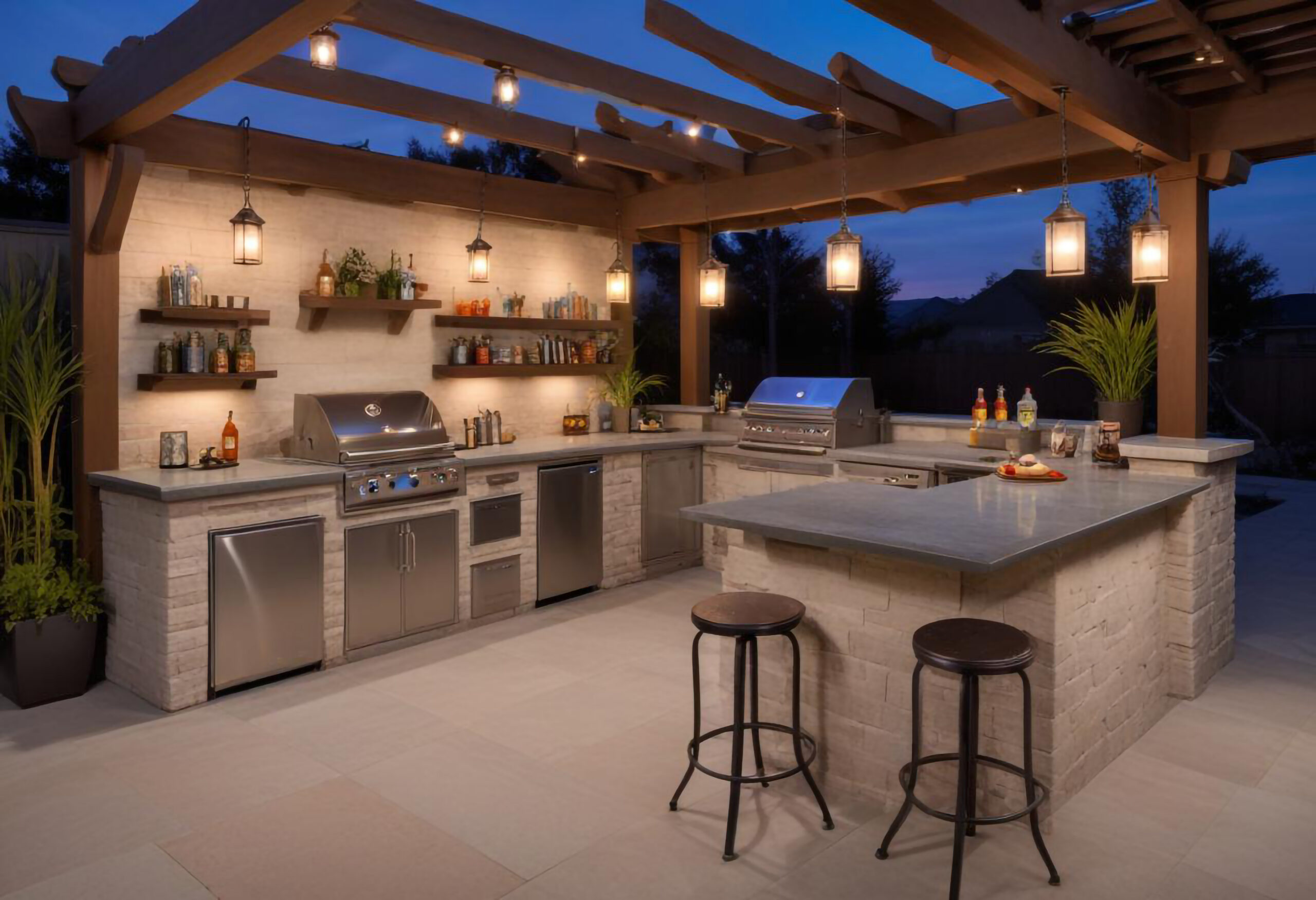
If you have ever watched a backyard gathering wind down the moment the sun dips below the fence, you already know the problem. A well-built outdoor kitchen loses half its value without proper lighting and electrical planning, and that is something every reliable backyard patio contractor will tell you before a single shovel hits the ground. Working with an experienced patio team means those systems get discussed during the design phase, not after the concrete has already cured.
At Denver Patio Masters, we build outdoor kitchens from the ground up, and electrical and lighting planning is part of the design conversation from the start, not a detail handled after the concrete has cured.
Why Lighting and Power Must Be Planned Before Construction Begins
Running conduit for electrical, stubbing in gas lines, and planning outlet placement are tasks that happen before the patio surface goes down and before the outdoor kitchen structure is built. Once the concrete is poured or the pavers are laid, running new conduit underneath the surface requires cutting through finished work. That drives cost up significantly and can affect the finished appearance of the surface.
Getting the infrastructure planned and roughed in during the original build is the most cost-effective approach. It also means the finished kitchen performs exactly as designed rather than having workarounds because certain outlets or fixtures could not be positioned where they were needed. A few decisions made early in the design stage eliminate a category of problems entirely.
Task Lighting for the Cooking Zone
The cooking surface is where lighting matters most. Under-cabinet lighting positioned above the grill station and prep counter gives the cook direct, shadow-free light on the work surface. Recessed fixture lighting, integrated LED strips, and directional spotlights are all common approaches for this zone depending on the counter and cabinet configuration.
Color temperature matters in a cooking environment. A cooler white light in the range of 4000K makes it easier to see the actual color of food and read the state of the grill or burner clearly. Warmer tones work better in dining and seating areas where the priority is comfort rather than precision.
Fixture placement should also account for Colorado’s afternoon sun angle. In a west or south-facing outdoor kitchen, the cooking area may be in full shade by early evening, which means the task lighting is carrying the full load from the start of dinner. Planning for that coverage at the design stage prevents a dim cooking zone later.
Ambient Lighting for the Dining and Seating Area
The area around the outdoor kitchen table and seating zone benefits from a different quality of light than the cooking surface. Overhead ambient fixtures, wall-mounted sconces on the patio cover or pergola posts, or string lights along the structure create a lit environment that feels comfortable and inviting rather than strictly functional.
Dimmer controls for the ambient zone are worth including at the planning stage. Being able to lower the dining area light for a relaxed evening or bring it up when needed is a practical feature that is significantly easier to add during construction than after. Conduit run during the patio pour can accommodate dimmer-compatible wiring without any additional surface disruption.
For outdoor kitchens with a patio cover or pergola structure, the overhead framework provides natural mounting positions for fixtures. Planning the lighting points at the same time as the structural post placements means the fixture locations work with the finished layout rather than being retrofitted around it.
Power Planning: Circuits, Outlets, and GFCI Requirements
An outdoor kitchen with a built-in grill, refrigerator, and lighting system needs dedicated electrical circuits. A standard setup typically requires a dedicated 20-amp circuit for the refrigerator, separate circuits for the grill’s ignition and any electric appliances, and general-purpose GFCI outlets positioned along the counter for convenience and code compliance.
GFCI (ground fault circuit interrupter) outlets are required by electrical code in outdoor kitchen applications. They shut off power when moisture contacts the circuit, which is the relevant safety mechanism for a cooking environment exposed to Colorado rain and snow.
The number of circuits and their amperage requirements depend on the specific appliances selected. This is one reason why appliance selection should happen early in the design process, not after the electrical rough-in is complete. Roughing in the wrong amperage for the final appliance list creates a problem that is expensive to correct once the patio surface is finished.
Running Conduit During the Patio Pour
The most cost-effective time to run electrical conduit and stub in gas lines is during the patio pour, before the outdoor kitchen structure is built. Conduit run beneath the patio surface can serve multiple endpoints: outlets along the kitchen counter, lighting power for the overhead structure, and any exterior fixtures around the patio perimeter.
Once concrete is poured, cutting through it to run conduit underneath adds labor, time, and a repair seam to the project. The cost difference between roughing in during the pour versus cutting through later is significant enough that it should drive the decision to plan electrical routes in advance, even if the specific fixture selections are still being finalized.
The same principle applies to gas lines. If a gas grill, gas fire pit, or any other gas appliance is part of the current or future design, the gas line should be roughed in during the pour. Running it afterward means either surface cutting or running it exposed, neither of which is a preferred outcome for a finished outdoor kitchen.
Weather-Resistant Fixtures for Colorado Conditions
Outdoor fixtures in the Denver area need to handle temperature swings, UV exposure, and occasional moisture from rain and snow. The standard rating for outdoor fixtures is IP65 or higher, which indicates protection from dust and directed water. For fixtures directly adjacent to cooking zones where heat and steam are present, higher-rated housings are worth the added cost.
Aluminum and stainless steel housings hold up better in Colorado’s UV conditions than powder-coated finishes that can chip or fade over time. Fixtures with sealed LED light sources are preferable to those with replaceable bulbs in the cooking zone, where heat and moisture exposure are highest through the season.
Wire connections in outdoor junction boxes should be rated for outdoor use, and all conduit terminations should be properly sealed. In Colorado, temperature cycling creates expansion and contraction in fittings over many seasons, which makes proper sealing more critical in Colorado than in mild-weather markets.
Coordinating Gas and Electrical in the Same Build
Outdoor kitchens that include both gas appliances and electrical components require careful layout coordination. Gas lines and electrical conduit need to maintain proper separation distances as specified by local codes, and gas shutoff locations need to be accessible without opening finished cabinetry.
This coordination is one of the reasons a design-to-build contractor is a more straightforward experience for outdoor kitchen projects than managing separate crews for the concrete work, the structure, the gas line, and the electrical rough-in. When the same team is managing the full project, these coordination details are resolved during the design phase, not discovered partway through construction.
Our Outdoor Kitchen Building Process
We build custom outdoor kitchens across the Denver metro area as part of full backyard projects that include patio surfaces, shade structures, and fire features. Every build is backed by our lifetime warranty, which covers the structure and workmanship on the finished installation. We are the only patio contractor in the Denver area offering this coverage.
Our Google rating stands at 4.8 stars based on 194 verified reviews. We were named Best Outdoor Living Contractor in Denver Metro for 2025, and our team serves homeowners in Aurora, Littleton, Highlands Ranch, Centennial, Parker, and throughout the Denver metro and Colorado Springs area.
Related Topics: