

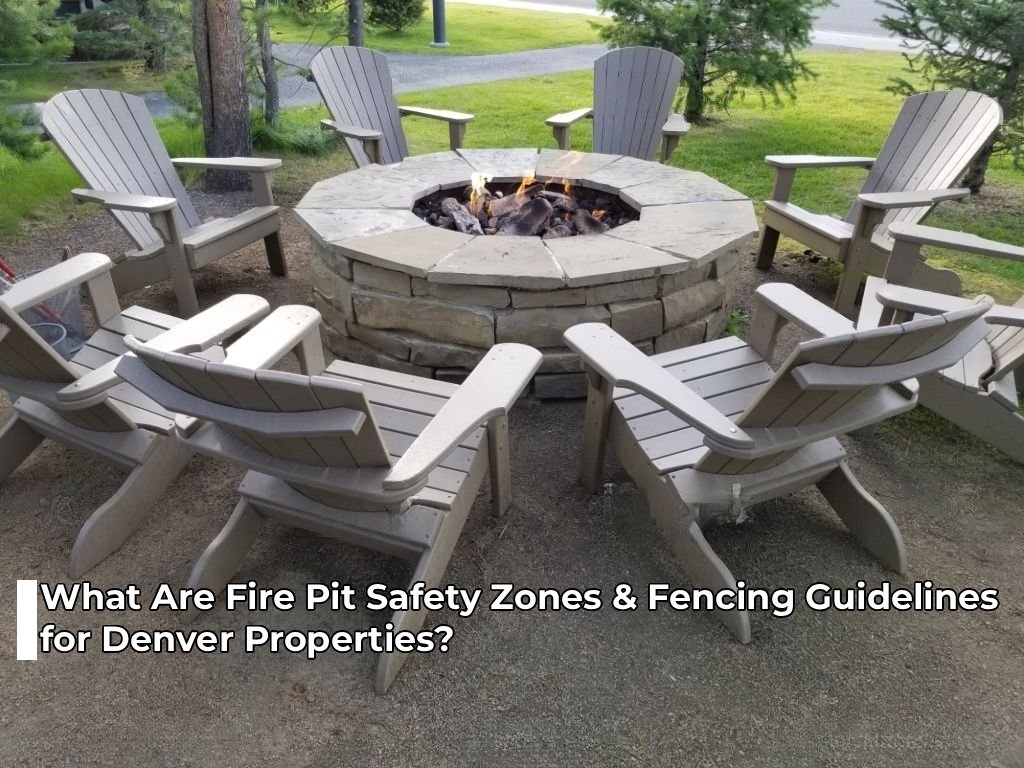
Planning a built-in fire pit for your Denver garden takes far more thought than picking a spot and stacking some stone. Safety clearances, proximity to fencing, and HOA requirements all shape where and how a fire pit gets built. Working with a trusted outdoor patio contractor in Denver, CO means getting those details right from the start, so you are not tearing apart a finished project just to move it three feet. Consulting fire pit experts early saves real time, real money, and a lot of unnecessary frustration down the road.
At Denver Patio Masters, we have designed and built custom fire pit areas across the Denver metro and know exactly what it takes to build one that passes HOA review, meets safety standards, and gets used season after season.
What Is a Fire Pit Safety Zone?
A fire pit safety zone is the area of clear, non-combustible space required around a fire feature on every side. For a built-in backyard fire pit, most fire safety guidelines and local codes call for a minimum of 10 feet of clearance in every direction from fencing, structures, overhead coverage, and any combustible material.
The goal is simple: prevent fire from spreading to a fence line, a pergola, a patio cover, or anything else nearby that could catch a spark. Colorado’s dry summer conditions and afternoon wind patterns make that 10-foot clearance worth respecting as a practical safety measure, not just a code requirement.
That 10 feet is a general starting point. Specific requirements vary by city, municipality, and HOA community. If your property is governed by an HOA, their design guidelines may set different minimums or add restrictions on fire feature placement that go beyond the general recommendation.
How Far Should a Fire Pit Be from a Fence?
The standard guidance from fire safety authorities recommends at least 10 feet between a fire pit and any fencing, structure, or overhead coverage. The more distance, the better, particularly on properties where lots are smaller and the fence line sits closer to the main outdoor seating area.
Wood fencing carries the most risk at close range. Pressure-treated lumber, cedar, and pine can all catch embers. Even if the fence does not ignite immediately, repeated exposure to heat and sparks weakens the wood over time and increases the long-term fire risk.
Metal and aluminum fencing carry significantly less risk at the same distance. A fence that will not ignite from stray embers is a meaningfully different situation than one that can. If you are designing a fire pit into a space with limited room, the fencing material becomes an active part of the safety conversation from the start.
What Do Denver HOA Communities Typically Require for Fire Pits?
HOA rules around fire pits vary quite a bit from one community to the next. In Denver suburbs like Highlands Ranch, Centennial, Parker, and Lone Tree, outdoor fire features are almost always addressed in the community’s design guidelines.
Common HOA restrictions include requirements for gas-only fire features, clearance distances that exceed the general 10-foot guideline, material and color restrictions for the visible surround, and in some communities, specific limits on the size of the fire feature or the type of ignition system.
We manage all HOA submissions and approvals for our clients. About 85% of the homeowners we work with are in HOA communities, and our team knows how to prepare fire pit project submissions that get approved without delays. You do not need to deal with that paperwork yourself.
What Fencing Materials Are Safest Near a Built-In Fire Pit?
Aluminum and steel fencing are the most fire-resistant options near a fire pit. They carry no combustible risk, hold up well through Colorado’s temperature swings, and require less maintenance than wood over time. Many HOA communities in Denver suburbs allow or actively prefer metal fencing, which makes it a practical choice on both fronts.
Wood fencing, including pressure-treated lumber and cedar, requires the full 10-foot clearance at minimum. If your existing fence line sits inside that zone, the fire pit design should be adjusted to get as much distance as possible. Assuming it will be fine closer than the recommended minimum is not a reasonable approach, particularly in Colorado’s dry summer months.
Vinyl fencing falls between the two. It will not ignite the way wood does, but it will melt and deform under prolonged heat exposure. For properties with vinyl fencing close to the intended fire pit location, maintaining the full clearance remains the right call.
What Base and Surround Materials Work Best Under a Fire Pit?
The surface directly beneath and surrounding a built-in fire pit should be non-combustible. Concrete and pavers are the standard choices for the base structure and the immediate surround. Both materials handle heat without damage and integrate naturally with the surrounding patio surface.
Gravel and stone finishes are also common in the zone immediately around the seating area. They provide a clean visual boundary and do not carry combustion risk.
Grass, mulch, and bark should be kept well outside the safety zone. Embers travel further than most people expect, especially with Colorado’s afternoon winds. Building in a non-combustible buffer around the fire pit is a straightforward way to reduce that risk significantly.
Gas vs. Wood-Burning: Which Fire Pit Works Better in a Denver Backyard?
Both types can be built safely when the clearances and construction standards are followed. Gas fire pits offer more control over flame behavior and remove the ember and spark risk that wood fires produce. For properties with limited outdoor space, close fence lines, or HOA restrictions on open-burning, gas is typically the more practical and approval-friendly choice.
Wood-burning fire pits have a traditional feel that many homeowners prefer, and they work well in larger backyards where the full safety clearance is easy to maintain on all sides. If the property layout supports it and the HOA permits it, wood-burning is a solid choice.
We walk through the tradeoffs for each specific yard during our free consultation. The right choice depends on the size of the space, the proximity of fencing and structures, and what the HOA review board will approve.
Can a Fire Pit Be Added to an Existing Patio?
Yes, in most cases. An existing concrete or paver patio can support a built-in fire pit structure, provided the surface is in good condition and the clearances work with the existing layout.
The main practical consideration is the gas line rough-in. If the existing patio does not already have a gas line stubbed in, running one after the fact involves cutting through or running beneath the finished surface. It is workable, but it costs more than having the line roughed in during the original patio pour.
If you have an existing patio and want to add a fire feature, the starting point is a site assessment to confirm the surface condition, check clearances, and determine what the gas line access looks like.
Why Homeowners Choose Denver Patio Masters for Fire Pit Installations
We have been building custom fire pit areas across the Denver metro and Colorado Springs for years, and every installation we complete is backed by our lifetime warranty. We are the only patio contractor in the Denver area offering this coverage. If the work fails, we come back and fix it.
We hold a 4.8-star rating on Google based on 194 verified reviews. We were named Best Outdoor Living Contractor in Denver Metro for 2025 by Best Of Best Reviews and ranked No. 566 on the Inc. 5000 list of fastest-growing private companies in America in 2024.
Beyond the fire pit itself, we build the full outdoor space: concrete and paver patio surfaces, pergola and patio cover structures, outdoor kitchens, and retaining walls for sloped yards. One team, from design through final walkthrough.
Frequently Asked Questions
How far should a fire pit be from a wood fence? The standard recommendation is a minimum of 10 feet between the fire pit and any wood fencing. More distance is always better, particularly in Colorado’s dry summer months where ember travel is a real concern. The fencing material matters too: aluminum and metal fencing carry far less risk than wood at the same distance.
Do I need a permit for a built-in fire pit in Denver? Permit requirements vary by city and project type. Gas fire pit installations typically require a gas line permit. Our team is familiar with local permit requirements across the communities we serve and will advise on what is needed during the consultation process.
Can my HOA restrict what type of fire pit I can have? Yes. Many HOA boards in Denver suburbs require fire features to be gas-only, set minimum clearance distances beyond the general guideline, and restrict the materials or colors visible from neighboring properties. We handle all HOA submissions on behalf of our clients and have worked through the approval process across the Denver metro area.
How much does a built-in fire pit cost in Denver? Built-in fire pit installations typically range from $2,500 to $8,000 or more, depending on the size, materials, and whether a gas line is part of the build. Exact pricing requires an in-home assessment of the specific site and layout.
Does Denver Patio Masters offer a warranty on fire pit installations? Yes. We are the only patio contractor in the Denver area offering a lifetime warranty on all our work, including fire pit installations. If something fails, we return to fix it at no additional charge.
What is the safest surface material around a fire pit? Concrete and pavers are the most practical and widely used options. Both are non-combustible, hold up well under heat exposure, and integrate naturally with the rest of the patio surface. Gravel is another common choice for the immediate surround area where additional buffer is needed.
Contact Us
Need help designing or building your dream outdoor space? Reach out to Denver Patio Masters, Colorado’s patio and outdoor living specialists.
Address: 8200 S Quebec St, Suite A3703, Centennial, CO 80112
Phone: (720) 594-0235
Email: info@denverpatiomasters.com
Business Hours: Monday–Sunday: 9:00 AM–5:00 PM
Whether you’re ready to start a project or want a free consultation, give them a call, send an email, or visit their contact page to connect with the team and begin transforming your outdoor living space.
Related Topics: